
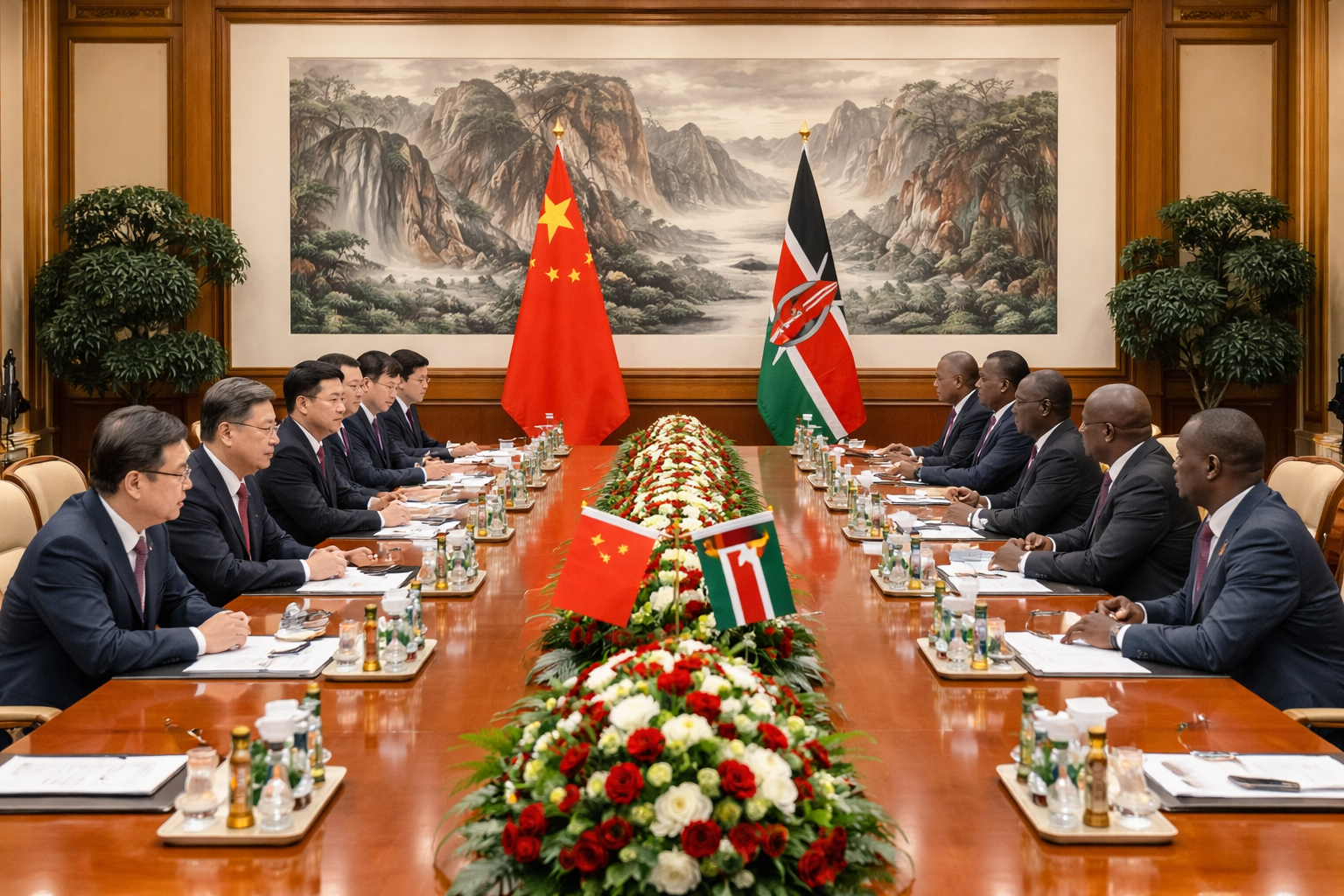
Asia’s economic reordering has so far been told as an internal story. Japan's capital inefficiency, South Korea's export dependence and Vietnam's fragile ascent all describe economies adjusting around a common centre of gravity. China is that centre.
However, as its growth model strains, the effects are no longer contained within the region. Rather than resolving excess capacity, weak demand and misallocated capital at home, Beijing is increasingly pushing this adjustment outward. Nowhere is this more visible than in Africa, where growth is accelerating just as Chinese exports, capital and influence surge [Financial Times]. The result is an apparent crossover - Africa rising as Asia slows - that risks being mistaken for convergence. What is unfolding instead is a redistribution of economic pressure, with Africa absorbing both the opportunity and the vulnerability created by China’s slowdown.

Africa’s improved growth outlook has arrived at a moment of global rebalancing. As China’s domestic demand weakens - with retail sales growing at the slowest pace in nearly three years (1.3% year-on-year in November) - its export engine has accelerated outward. As a result, Africa has emerged as a primary destination.
Chinese exports to the continent rose 25.8 per cent year-on-year to US$225 billion, sharply widening trade imbalances even as headline GDP growth across sub-Saharan Africa has firmed [SCMP]. Much of this trade consists of capital goods machinery, construction materials, energy equipment that support infrastructure build-out, and industrial ambition in economies such as Kenya.
In aggregate, this has lifted activity and eased some near-term constraints on growth, particularly as higher commodity prices and a weaker dollar improve external conditions. Yet the asymmetry is persistent. African economies continue to export predominantly raw materials while importing increasingly sophisticated manufactured goods. This reinforces a pattern in which growth is driven by volume rather than value creation. The result is an expansion in headline GDP rather than in underlying financial positions, leaving the continent more exposed to shifts in global demand and financial conditions than aggregate growth figures suggest.
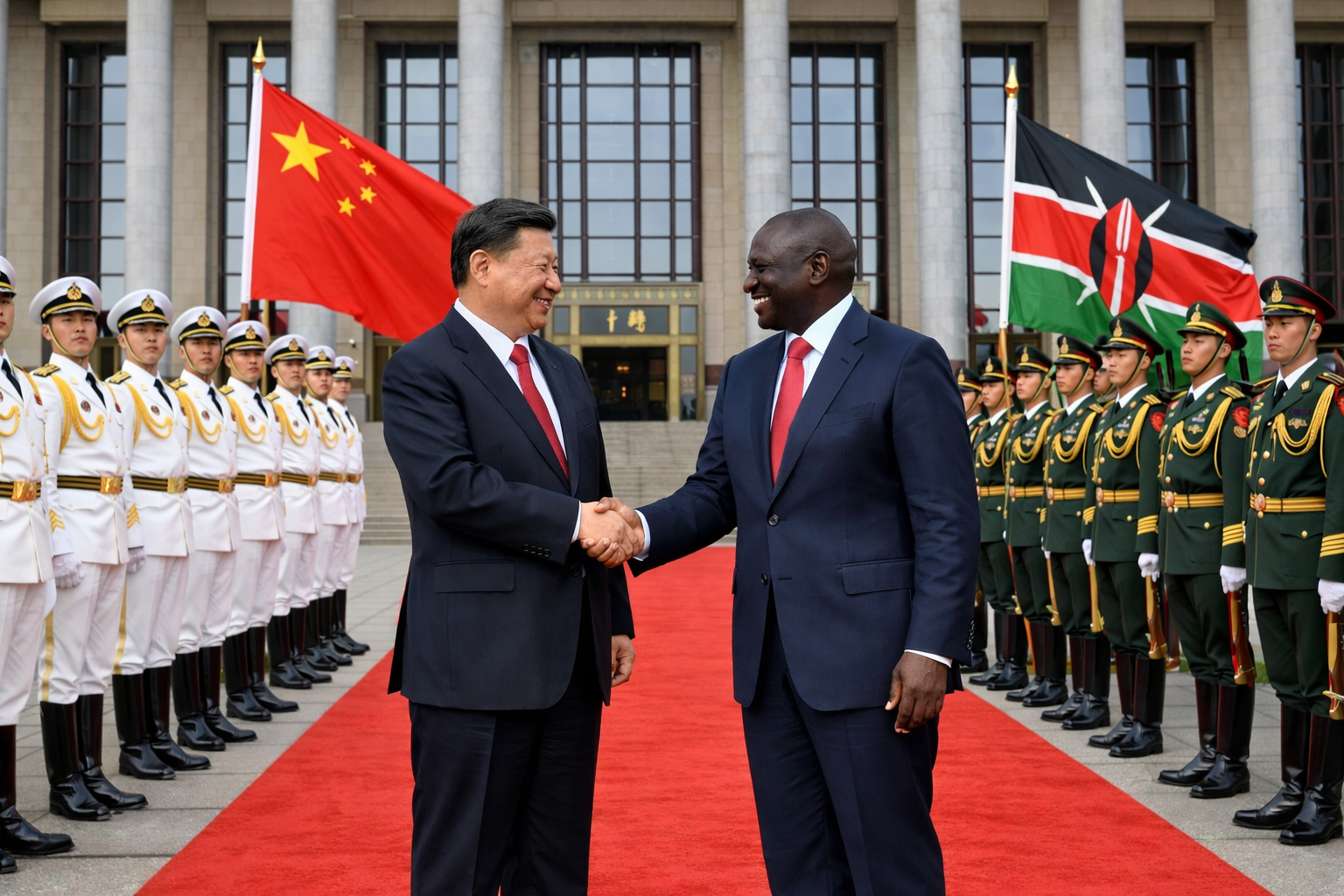
Kenya offers a clear illustration of how this growth exposure trade-off is being managed in practice. Chinese-financed infrastructure, most notably the Standard Gauge Railway (SGR), has both supported connectivity and expanded debt obligations.
In a bid to ease external pressures, Nairobi recently agreed with Beijing to convert part of its US-dollar-denominated SGR loans into Chinese renminbi. This move is expected to save roughly $215 million (Ksh27.8 billion) annually in debt servicing costs [The Kenya Times]. The original loan of about $5 billion from the Export-Import Bank of China, of which around $3.5 billion remains outstanding, has been central in efforts to modernise transport links from Mombasa to Nairobi. By reducing reliance on dollar exposure, Kenyan officials aim to spread currency risk and relieve pressure on foreign-exchange reserves.
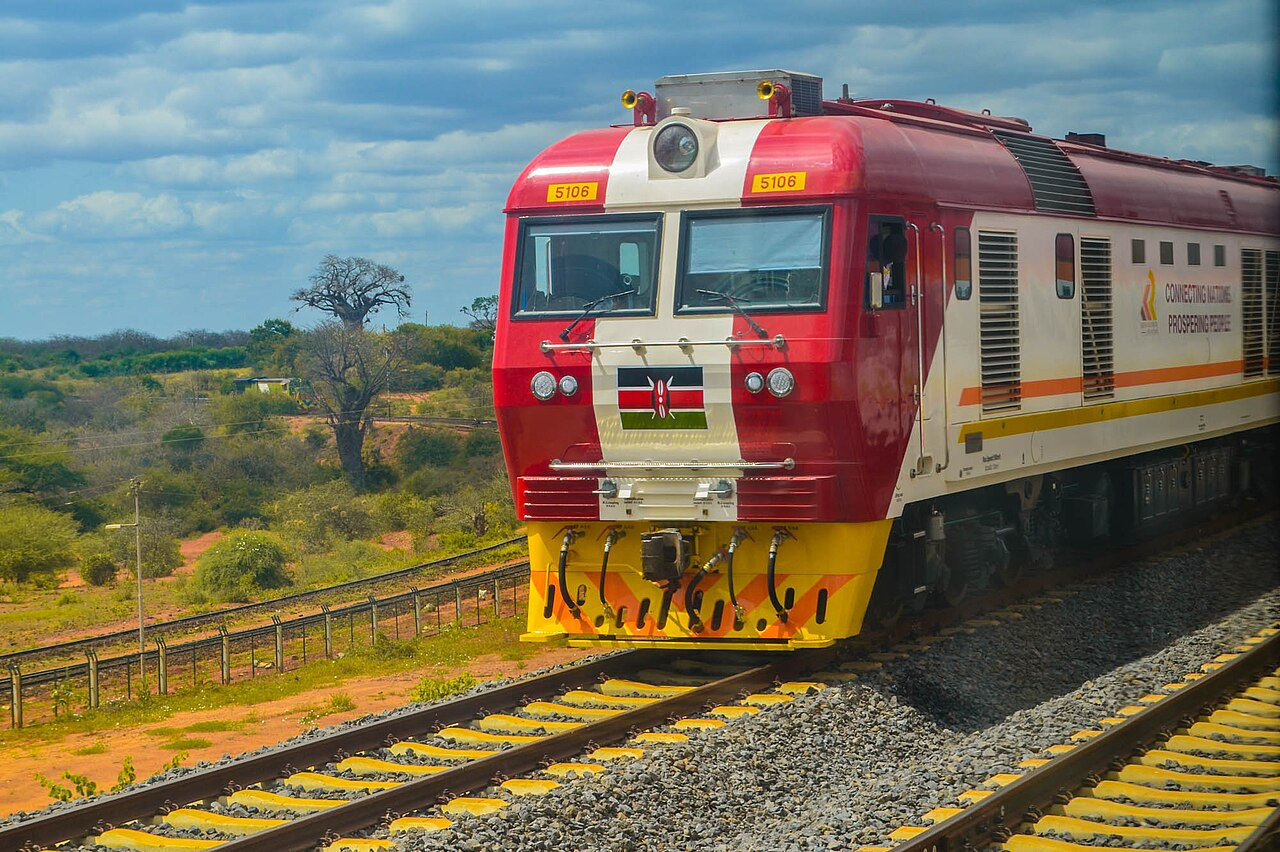
Yet the strategy highlights the deeper structural constraint: currency diversification improves terms but does not alter the underlying reliance on external capital. Imports continue to outpace exports, local industry struggles to compete with cheaper foreign goods, and fiscal space is constrained by the need to honour past commitments. Growth persists, but it is increasingly conditional, sustained by access to foreign finance rather than by a decisive shift in domestic productivity. Kenya’s experience underscores a broader African challenge: managing the inflow of capital and goods without locking in a development path that delivers headline expansion at the expense of balance-sheet resilience.
In Kenya, the limits of this growth model are increasingly visible at the household level. Despite resilient GDP expansion, per-capita income gains remain modest. This is constrained by rapid population growth and weak productivity improvements, with around 90 per cent of employment remaining informal, limiting wage growth and income stability (World Bank).
Investment has flowed into infrastructure and services, but far less into sectors that generate large-scale employment or export diversification. As a result, growth has not translated cleanly into rising domestic demand. Households remain sensitive to food and energy prices, while firms face tight credit conditions and elevated borrowing costs, reinforcing caution rather than confidence.
This pattern mirrors a broader African challenge. According to the World Bank, a one-percentage-point increase in per-capita GDP in sub-Saharan Africa reduces extreme poverty by only about one per cent, less than half the impact seen in other regions. For economies such as Kenya, this means that even sustained growth of 4-5 per cent delivers only incremental social and fiscal relief.
Without a stronger link between expansion, productivity and incomes, growth remains externally supported, with limited transmission into employment and domestic demand. The risk is not stagnation, but entrenchment in an equilibrium of expansion without upgrading, increasing vulnerability to shifts in external financing and trade conditions.
Africa’s opportunity is not accidental. It reflects the continent’s demographics, its underpenetrated markets, and its growing relevance as Asia’s growth engine slows. However, it is also shaped by forces beyond its control. As China grapples with weak domestic demand and industrial overcapacity, its excess production, capital and financial influence are being pushed outward. Africa, with its infrastructure gaps and latent demand, has become a natural destination. Kenya’s experience captures this duality: cheaper capital goods, improved financing terms, and currency diversification offer near-term relief, even as structural dependencies deepen.
The challenge is that growth alone is no longer sufficient. As the World Bank notes, incremental per-capita gains in Africa translate into far weaker poverty reduction than elsewhere. Without productivity upgrades, industrial deepening and stronger domestic demand, expansion risks becoming self-limiting. Kenya’s yuan-denominated debt deal eases balance-sheet pressure, but it does not alter the underlying growth model that leaves households exposed and value creation thin.
To conclude, Africa’s faster growth relative to Asia is less a reversal of fortunes than a crossing of trajectories. Asia slows under the weight of maturity and misallocation; Africa advances on potential rather than transformation. Whether this moment becomes a turning point depends on whether African economies can convert external inflows into internal resilience. Otherwise, the continent risks absorbing not just China’s exports, but its imbalances as well. Growth may continue. Credibility, as Asia has learned, is harder to manufacture.