
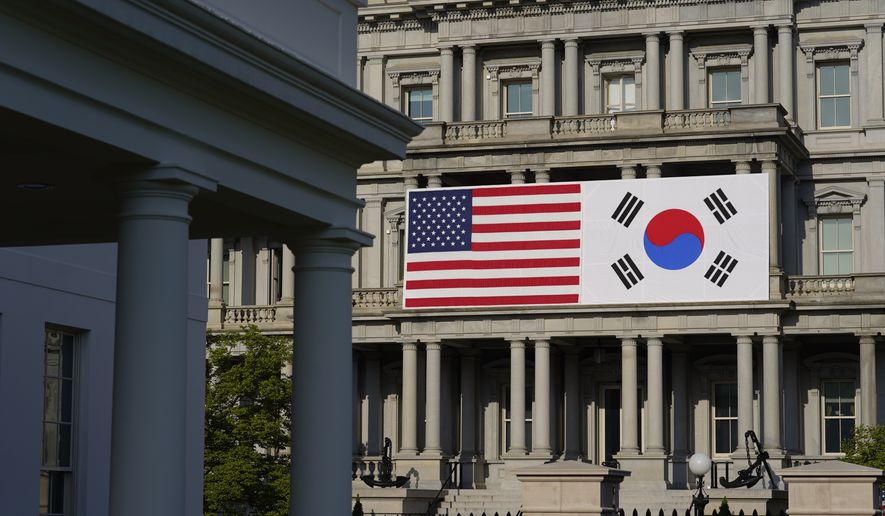
On the surface, South Korea remains a cornerstone of global supply chains. Its conglomerates dominate markets in semiconductors, autos, and batteries, with investment commitments in the U.S. cementing its role as a manufacturing hub of the future. Yet this resilience masks acute vulnerabilities. GDP has already contracted, consumer sentiment has been battered by political upheaval, and exports, traditionally Seoul’s lifeline, are faltering under the weight of U.S. tariffs and a slowing Chinese economy. Hyundai and Kia, long engines of growth, now face a direct hit from Washington’s 25 per cent levy on cars and parts, a sector that accounts for nearly a third of Korean exports to the U.S. Meanwhile, the won has slid to a 16-year low, amplifying debt burdens and curbing domestic consumption.
The numbers underline the strain: with IMF forecasts slashed to just 1 per cent growth this year, South Korea risks slipping from cyclical slowdown into structural malaise unless it can reconcile economic resilience with strategic clarity (Financial Times). So why worry if South Korea remains a global leader in semiconductors, autos, and shipbuilding? The concern lies in how little of that industrial strength is translating into sustainable growth. GDP shrank 0.2% quarter-on-quarter in Q1 2025 and just 0.1% year-on-year (Bank of Korea), while exports, the backbone of the economy, are down 5.2% in April, including a 14.3% plunge in U.S.-bound shipments.
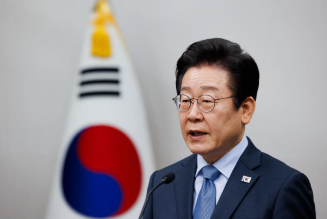
By contrast, Taiwan is projected to expand 3% on resilient chip demand, and Vietnam continues to attract manufacturing inflows diverted from China. The gap underscores Korea’s vulnerability to external shocks.
The drivers are stark: Washington’s 25% tariffs on cars and steel have hit Hyundai and Kia at the core of their earnings base, a slowing China is eroding demand for intermediate goods, and political instability has curtailed Seoul’s ability to respond decisively. While sectors such as batteries and consumer electronics show promise, the broader economy risks sliding into prolonged stagnation unless Korea can diversify markets, reduce dependence on external demand, and restore investor confidence through political stability.

The scale of the challenge is clearer. Despite Korea’s reputation as an export powerhouse, U.S. tariffs under the Trump administration are already shaving billions from earnings, with steelmakers and automakers among the hardest hit. Yet the deeper concern is not simply the cost of tariffs, but how political instability has left Seoul unable to mount a coordinated response. The collapse of President Yoon Suk Yeol’s government and the ensuing caretaker administration created a vacuum at precisely the moment decisive negotiation was needed.
These vulnerabilities reveal that Korea’s difficulties are not merely cyclical but structural: an overreliance on external demand, excessive dependence on both China and the U.S., and a fragile domestic consumption base weakened further by high household debt.
Consequently, the result is an economy that can generate world-class innovation in chips and batteries, yet struggles to shield itself from geopolitical shocks. Unlike Japan, Seoul has resisted pressure to strike a quick “trade-for-stability” deal with Washington, wary of conceding too much leverage in the face of an uncertain U.S. policy stance. Policymakers argue that rushing would set a precedent, undermining Korea’s bargaining power with both Washington and Beijing. But the longer Seoul delays, the greater the risk that tariffs, currency weakness, and political fragmentation will erode its ability to secure a favourable settlement at all.
Undoubtedly, South Korea’s refusal to sign a “Japan-style” agreement with Washington reflects more than stubbornness; it underscores the country’s awareness of its structural vulnerabilities. Unlike Japan, which secured a degree of tariff certainty in exchange for vast capital commitments, Seoul has chosen to preserve its bargaining power rather than cede strategic autonomy to U.S. discretion. Yet this posture comes at a cost: prolonged exposure to 25% tariffs, a volatile currency, and weakening consumer demand at home. The path forward requires more than tactical delay. South Korea must leverage its strengths in semiconductors, batteries, and shipbuilding while simultaneously reducing its overreliance on external demand and diversifying financial backstops, such as securing a currency swap with the U.S. or deepening links with ASEAN. In this instance, hesitation alone offers no shield. Without a framework to restore predictability, Korea risks drifting into crisis, but with a carefully negotiated deal, Seoul could turn short-term uncertainty into a longer-term opportunity to redefine both its economic resilience and its strategic autonomy.
What distinguishes South Korea’s dilemma is that it cannot afford to adopt Japan’s strategy in full, nor can it risk outright confrontation with Washington. Instead, the task is to craft a hybrid model: one that accepts a degree of compromise with the U.S. to secure stability while keeping enough independence to manoeuvre with Beijing and maintain diversified export markets. Success here would not only stabilise the domestic economy but also demonstrate that middle powers can chart their own course in a world increasingly defined by binary choices.
For investors and policymakers alike, this is the crux: whether South Korea can turn its “quiet crisis” into a platform for reinvention, or whether it becomes another casualty of escalating U.S.-China rivalry. Much like Japan before it, the stakes are not merely cyclical but structural. Only this time, the answers will reverberate well beyond Seoul.