
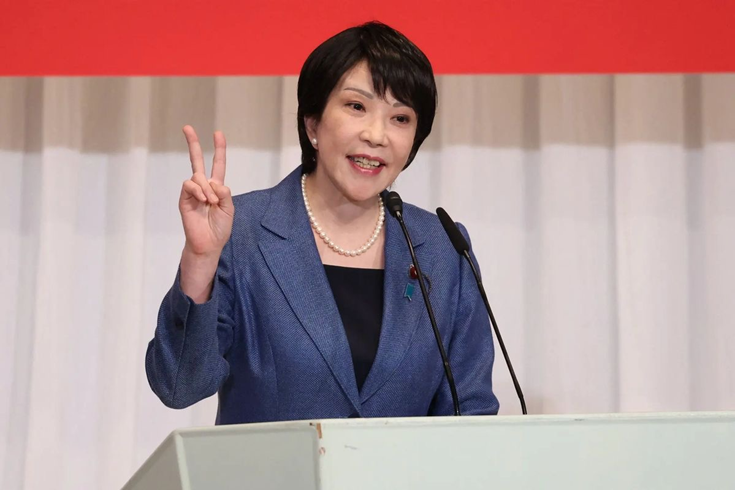
• Political Shift: Sanae Takaichi’s appointment as Japan’s first female Prime Minister sparked a surge in market confidence, with investors responding strongly to her fiscal stance and leadership style.
• US–Japan Alignment: Donald Trump’s Asia tour strengthened ties with Japan, with his meeting with Takaichi marking the start of what many see as a new golden age between the two nations.
• Matcha Supply Strain: Despite global demand soaring, Japan’s matcha industry is struggling to keep up due to shrinking farms and limited tencha production, raising concerns about future supply.
On October 4th, it looked highly likely that Takaichi would become the new PM of Japan after winning the vote of her fellow democrats over her rival, Shinjiro Koizumi, to become President of the Liberal Democratic Party. The vote was in favour of Takaichi with 185 votes to 156. Despite Koizumi being the favourite due to his policies and fresh, young persona, his campaign was marred by a scandal involving stealth marketing, where he asked associates to promote his campaign. He later apologised for this. Takaichi had won the vote. As President of the Liberal Democratic Party, the main Japanese party for the last seventy years, her position as Prime Minister was looking far more likely. Coming into this run-in, investors knew what Takaichi would be like. Seen as the Japanese Thatcher, she was expected to pursue high fiscal stimulus and a desirable monetary policy, and with this being known, Japanese stocks soared.
Fast forward two weeks, and it was now certain she would become the new PM, as her party formed a coalition with the Japan Innovation Party, certifying her chances of becoming the first ever female Prime Minister of Japan. Now, coming into this role, it was all eyes on her, and all eyes on her meeting with the President of America, Donald Trump.

72 hours after coming into power, Takaichi appeared in front of fellow MPs to discuss her future approaches. Her catalogue of policies is highly focused on tackling inflation, which has been rather high and peaked at 4.0% in the past year, as seen on this graph of Japanese Inflation, and on boosting growth. What was most notable in her first appearance was that her government would aim to reach its target of increasing defence spending to 2% of GDP in the current fiscal year to March. Her fiscal stimulus was apparent from the start, as increasing defence spending shows signs of her use of expansionary fiscal policy, and she hinted that Japan would issue higher levels of debt to fund such an increase in expenditure.
The Nikkei 225, a stock market index for the Tokyo Stock Exchange operating in the Japanese yen, ended this week close to an all-time high, nearly hitting the much-awaited 50,000 mark. The markets approved her policies and reasoning: “The strategic deployment of fiscal measures will increase household income, improve consumer sentiment, raise corporate earnings, and produce higher tax revenues without increasing tax rates.” A good start to her reign as Prime Minister, to say the least, but now it was all eyes on her meeting with Trump.
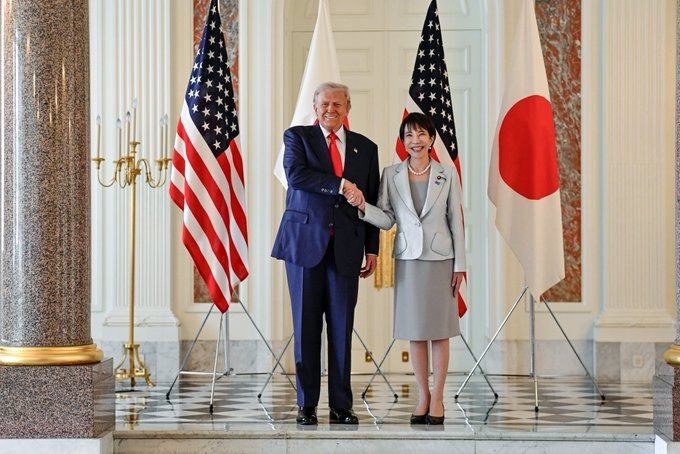
The meeting was already likely to start well. Trump had expressed that he was friends with former Prime Minister Shinzo Abe, with whom Takaichi had close relations, and she intended to greet the President warmly with his golf clubs. The meeting saw Trump and Takaichi sign a deal to secure the supply of rare earths and critical minerals and to invest in mining and processing as part of a push to reduce reliance on Chinese minerals.
Earlier in the year, Trump placed 25% tariffs on Japanese goods, which were later cut to 15% in return for a large investment in the US. Japan presented Trump with a list of projects in the US that could make up part of their $550bn investment as a return for the reduction in tariffs. It was clear that this was the start of a fruitful relationship between the pair, entering a new golden age with global stocks showing evidence of this. The US was not done there, with US Treasury Secretary Scott Bessent advocating for the Bank of Japan to raise interest rates to fight inflation, which sent stocks to an all-time high as the Nikkei 225 jumped 2.5%. Overall, the US involvement was seen as a success, and there is high hope for strong relations between these prominent countries.
If you have been to any popular coffee shop in the past year, you will have seen a bright green drink called matcha. Thanks to its numerous health benefits, matcha has become a staple of many coffee houses in the past year, as well as in sweet treats such as KitKat Matcha. The most renowned place to get matcha in the world is the city of Uji in Japan.
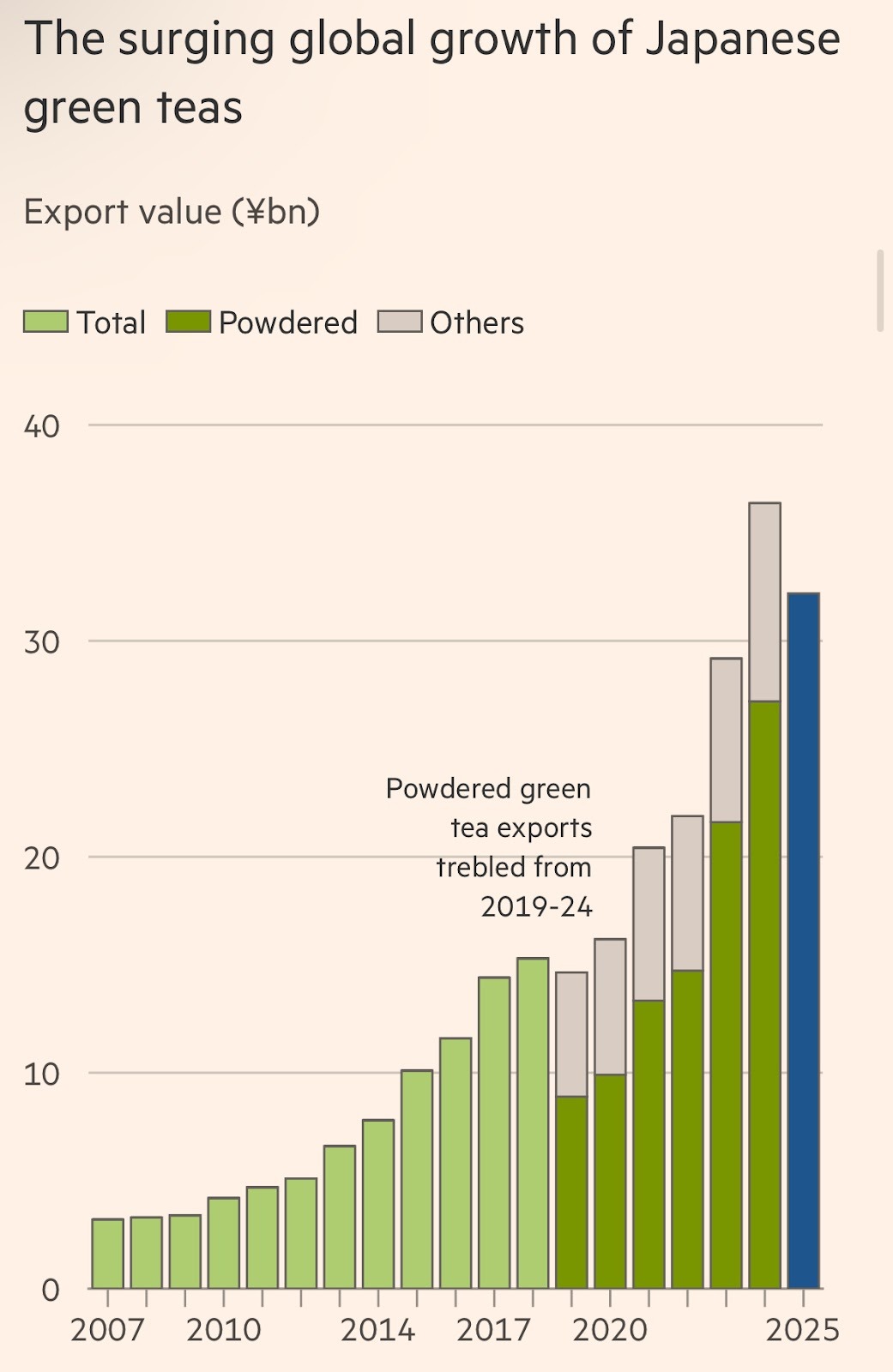
Japan’s exports of matcha were up 75% to ¥27bn ($177mn) in 2024 and have tripled since 2019. It has already exported twice as much in 2025 as it did during the whole of 2020. This booming demand should, in theory, be great for Japanese growth.
However, global demand is far higher than the supply that Japanese farmers can offer. To make more matcha, farmers need more tencha, the type of tea leaf specially grown for grinding into powder, and with the number of farms around Katahira’s plantations having fallen from forty to six, it is vital that new machinery for big matcha suppliers comes in, and comes in fast.
To conclude, Japan is full of enthusiasm following the appointment of its first female Prime Minister, Sanae Takaichi. Her expansionary fiscal policies and successful high-level meeting with US President Donald Trump, which secured trade deals and investment, have been met with strong market approval and a surge in the Nikkei 225 to all-time highs. However, this positive momentum in the Japanese economy is tempered by a significant challenge for one of its popular exports, matcha. We should look out for whether supply can match the massive demand and continue to fuel Japanese growth.