
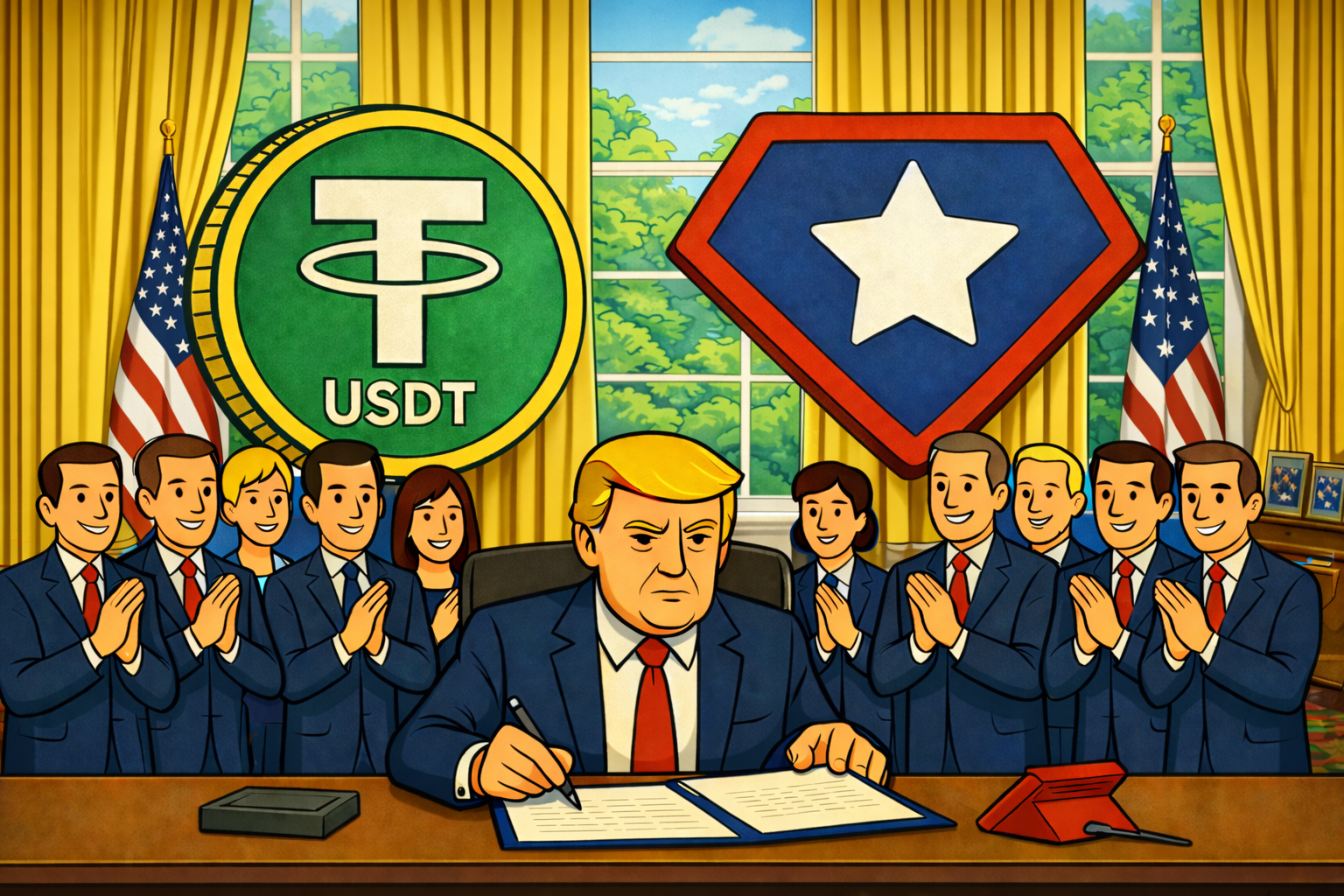
The GENIUS Act was signed into law by Donald Trump on July 18 2025. It requires stablecoin issuers operating in the United States to maintain “100% reserve backing with liquid assets like U.S. dollars or short-term Treasuries and require issuers to make monthly, public disclosures of the composition of reserves”.
This change in the law primarily impacted Tether, as USDT does not fully qualify under the GENIUS Act. Under U.S. law, it operated in “grey areas”, inducing hesitation from investors. Its reserves include offshore assets like Bitcoin and gold that do not meet the “liquid assets” requirement specified.
The GENIUS Act doesn’t ban Americans from holding or trading USDT, but it does create regulatory and operational challenges. Exchanges serving U.S. users may steer them towards compliant stablecoins such as USDC, PYUSD or USAT.
USAT is a fully U.S.-compliant stablecoin. Tether licenses the USAT trademark and manages the marketing and strategy. Anchorage Digital Bank (ADB) is the legal issuer of USAT under U.S. banking law. ABD states that it “issues USAT to, and redeems USAT from, Clients on a one-to-one basis to the U.S. dollar (i.e., one USAT to USD $1.00), net of any fees disclosed in the USAT Fee Schedule”. This ensures users receive fiat instantly on redemption.
ADB also states that the exchange for transactions “are held in the form of cash and investments in assets that are low-risk and highly liquid” and “all assets in the USAT Reserve meet or exceed the U.S. dollar value” in circulation. This means USAT is fully compliant with the GENIUS Act, allowing Tether to compete with other U.S.-compliant stablecoins.

Tether launched USAT in response to the GENIUS Act, which requires stablecoin issuers to hold their reserves in100% liquid U.S. assets, such as U.S. dollars or short-term Treasuries, and to be completely transparent about their reserves.
As a result of this, USDT cannot be labelled as a “U.S.-compliant stablecoin”, nor can it be legally used by U.S. banking systems, fintech platforms, or payment processors. This puts Tether at a significant disadvantage, cutting off access to the U.S. market and diminishing its dominance. U.S. users may switch to USDC or PYUSD, which hold 100% liquid reserves and guarantee instant redemption for U.S. dollars.
To overcome these barriers, Tether created USAT so that it can keep USDT’s reserve in Bitcoin and gold, while still accessing the U.S. market through USAT. This aims to retain and attract U.S. institutions and American users who want GENIUS Act-compliant stablecoins.
USAT allows Tether to maintain access to U.S. financial markets without requiring a change to USDT’s existing reserve. USDT’s broader reserve strategy provides flexibility in managing liquidity, which has enabled Tether to expand rapidly across cryptocurrency markets by offering users access to dollar-denominated value.
USAT therefore becomes an additional option for U.S. users to hold dollar-denominated digital assets. It can continue to integrate with banks, fintech platforms, and payment systems, allowing faster redemption and reduced counterparty risk through transparent reserve disclosure.
It also ensures that Americans can access a Tether-backed digital dollar within a regulated infrastructure and still have access to the Tether ecosystem. This includes cross-chain transactions, liquidity pools, DeFi lending on platforms like Aave, and P2P transactions - without the need for banks.
USAT allows Tether to preserve its market dominance while gaining access to U.S. markets, and complying with the GENIUS Act.
The growth of stablecoins has led to increased scrutiny from banks and financial regulators, primarily because they challenge traditional banking institutions. Stablecoins allow users to hold and transfer dollar-denominated value without the need for a middleman.
In many regions, access to reliable banking services is limited, and cross-border payments through financial institutions can be slow, costly, and subject to regulatory barriers. Stablecoins offer an alternative: users can transfer them at any time, often at significantly lower cost, without relying on intermediaries.
Stablecoin adoption is particularly visible in countries where financial systems struggle to meet public demand for reliable access to money. In Nigeria, the government introduced the eNaira, a central bank digital currency (CBDC), in 2021 as an attempt to modernise payments.
However, when the eNaira was implemented, it faced significant scepticism and low adoption, partly due to concerns over government oversight and control compared to cash or cryptocurrencies. During Nigeria’s 2022-2023 cash shortage, limits on cash withdrawals led many citizens to seek alternative ways to store and transfer money, increasing interest in cryptocurrencies. Data from late 2023 reported that less than 0.5% of Nigerians actively used the eNaira, while many turned to cryptocurrencies, where transactions cannot be reversed by central authorities and users maintain self-custodied wallets.
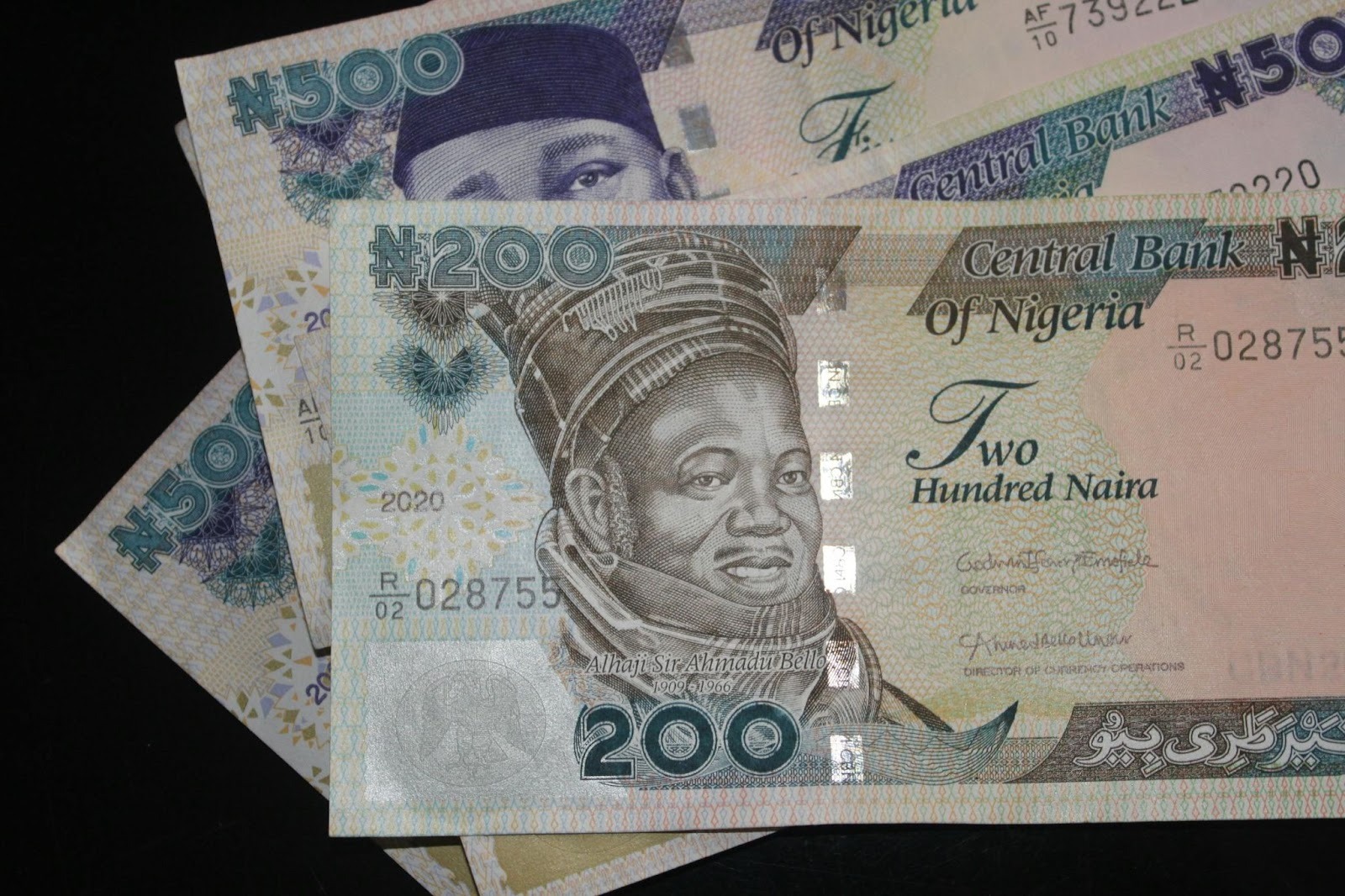
Stablecoins have become an alternative bridge for traditional finance, offering faster payments and reduced price volatility compared to other digital assets.
The reason for regulators to enforce strict rules is to prevent risks, such as previous events involving stablecoins crashing like TerraUSD (UST) in 2022, which collapsed as it did not have a real asset backing.
The stablecoin UST functioned by keeping its $1 price using another cryptocurrency called LUNA. If UST went below $1, traders were supposed to burn UST and receive $1 worth of LUNA, pushing the price back up. What happened was that the large amounts of UST were suddenly sold, and the system created huge amounts of LUNA, leading to the supply increasing rapidly. Consequently, LUNA lost its value and could no longer support UST; both tokens lost confidence, and millions were lost.
However, it can be argued that regulations are not motivated by consumer protection but by the desire to maintain oversight over the financial system and people’s money, as stablecoins could reduce the influence of banks, as they do not provide the same benefits as stablecoin issuers.