
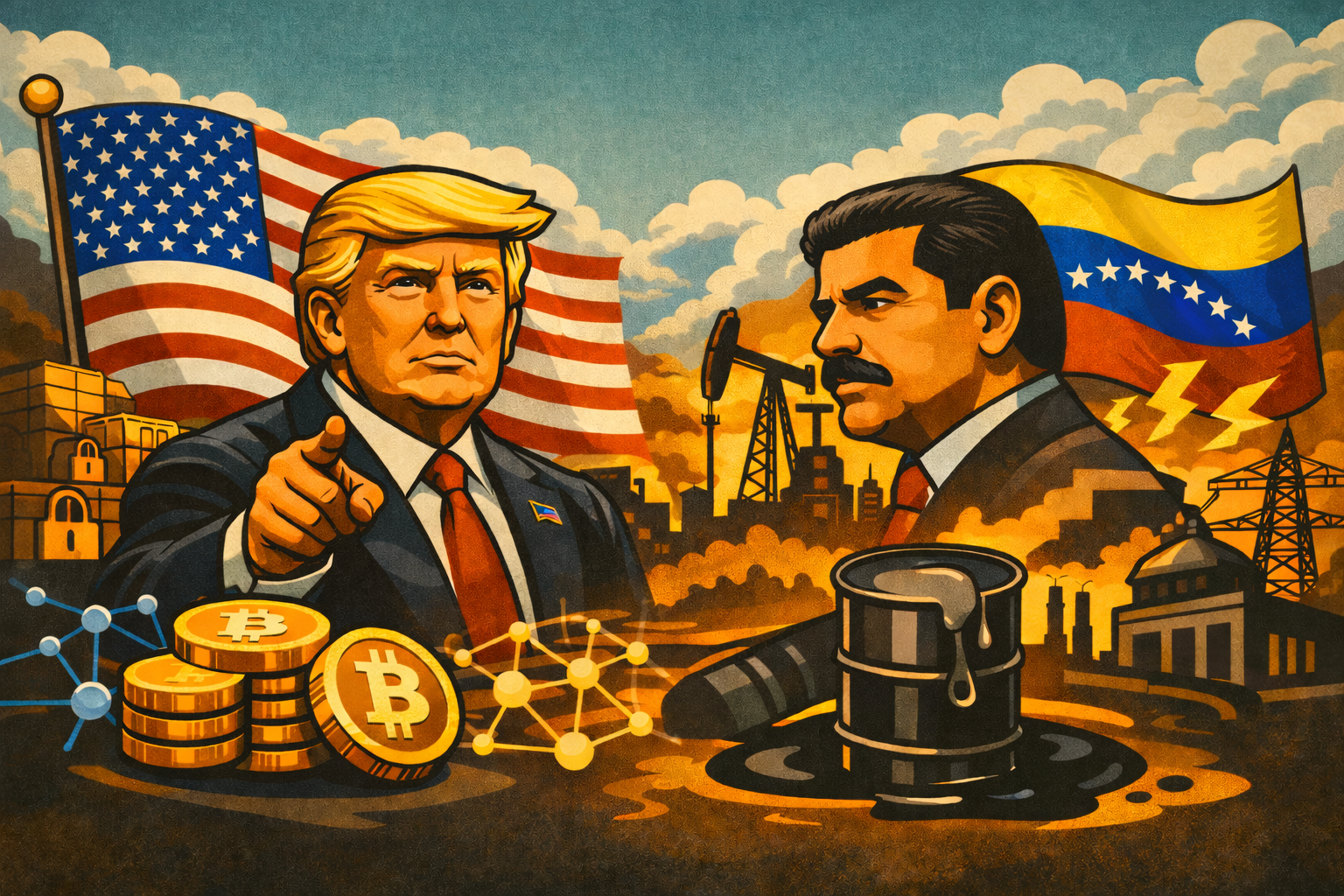
President Trump’s actions toward Venezuela came after years of economic collapse, rising sanctions, and growing attempts from the Venezuelan government to operate outside of traditional Western systems.
Gold, crypto, oil, power - it remains unclear what the President’s intentions are.

A significant factor that could decipher President Trump’s moves lies in Venezuela’s interactions with digital assets.
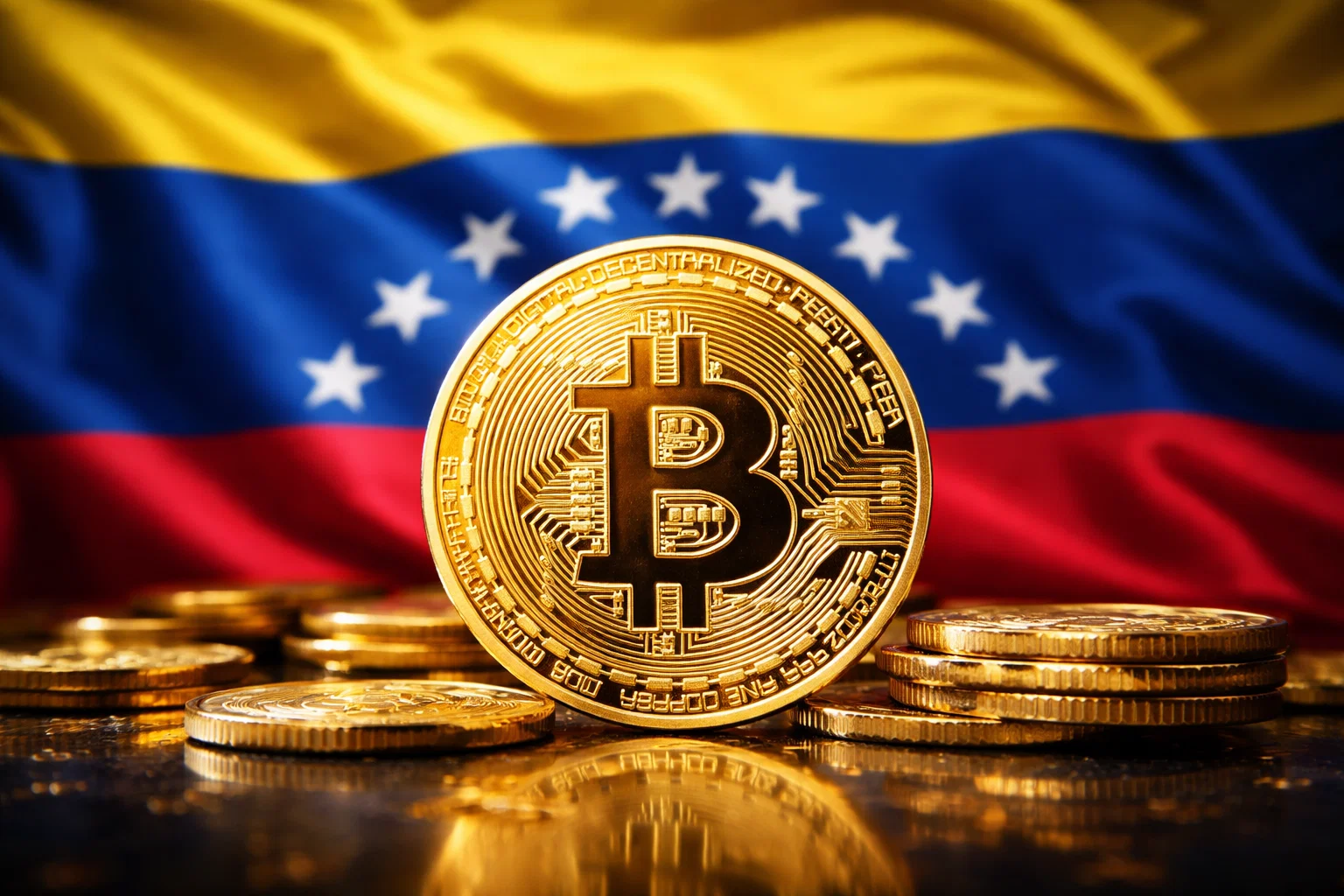
The Venezuelan government may have accumulated a ‘shadow reserve’ of Bitcoin worth as much as $60 billion, allegedly arising through deals involving oil revenue, gold, and seized crypto mining equipment. However, critics point out that Venezuela’s publicly traceable holdings amount to only about 240 BTC, roughly $22 million.
Venezuela’s early embracement of digital assets dates back to the February 2018 launch of the petro, a government-issued token backed by oil, gold, and diamonds. It was designed - at least in part - to counteract the effect of U.S. sanctions. The government claimed the presale raised $735 million across 127 countries, though independent analysis found little evidence that investors acquired petros at scale, and the token never achieved any meaningful adoption before being ultimately discontinued in 2024.
The petro was an attempt to move money outside of U.S.-controlled systems like SWIFT. It failed, but demonstrated that the state was willing to use cryptocurrency to dodge sanctions.
What matters for Washington isn’t whether the full $60 billion figure is accurate, but what it represents. Venezuela demonstrated a willingness to move money outside of systems that the U.S. can monitor, freeze, or put pressure on. Even partial success would weaken their sanctions.
In this light, the move against Venezuela looks less about ‘liberation’ and more about defence. It’s about asserting control over how funds move globally by limiting the use of crypto as a workaround for sanctions, thus solidifying the United States’ position on the global stage.
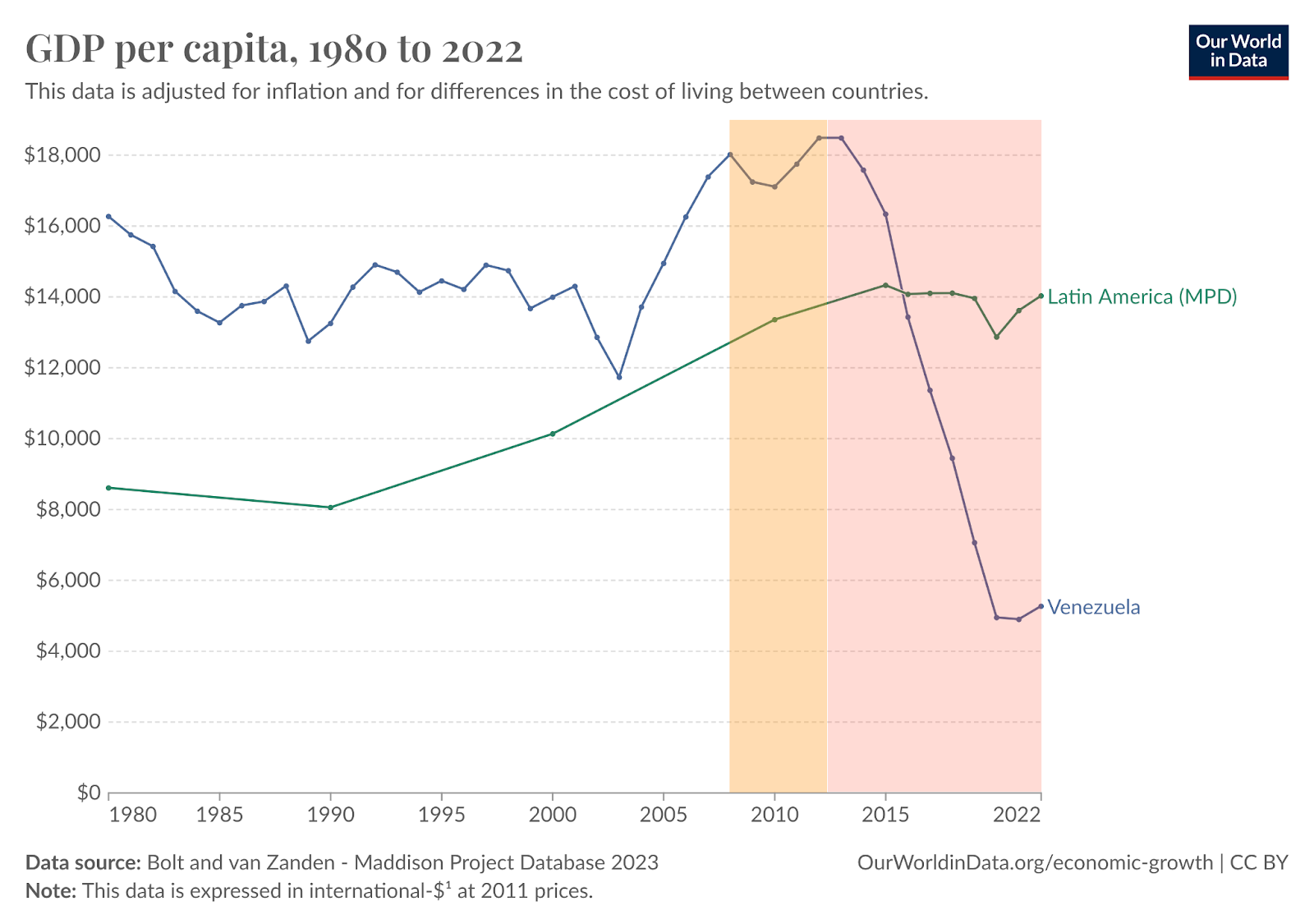
President Trump’s move on Venezuela came after the economy had already collapsed. Between 2013 and 2021, Venezuela’s GDP shrank by over 85%, one of the largest economic collapses ever recorded in peacetime. By this stage, the government had lost access to global finance and was operating in a state of survival.
Venezuela had already defaulted on over $60 billion of government and state-owned bonds, cutting it off from international capital markets and limiting its ability to fund itself.
Waiting longer would have reduced the U.S.’s leverage. As pressure dragged on, Venezuela began to adapt - using unregulated trade, digital payment methods, and alternative partners to keep crucial parts of the economy moving. Hyperinflation, which peaked at over 130,000% in 2018, had already pushed many citizens and businesses towards workarounds, like crypto and dollar-pegged stablecoins, just to function day to day.
Once the economy had failed, the state lost the ability to choose its own path.
After the collapse, influence became more important. With Venezuela cut off from the financial world, whoever shaped its re-entry into the global system would shape its future trade partners and financial alignments. For President Trump, securing influence at that stage meant controlling the terms of recovery - who could trade oil and gold, which sanctions would be lifted, and which government assets could be accessed.
A key factor behind the US's military operations in Venezuela could be to protect its national interests, such as the petrodollar.
During the Vietnam War, the Federal Reserve faced significant political pressure from Presidents Lyndon B. Johnson and Richard Nixon to keep interest rates low to finance the war and domestic spending. This led to the issuance of low-yield US sovereign bonds, resulting in cheaper borrowing for the government.
Many critics argue that this primarily led to the “Great Inflation” starting from the mid-1960s. As a result, foreign countries began doubting the US’s ability to back the dollar with gold, leading to the Nixon Shock, where the US abandoned the gold standard in 1971.
With concerns over rising inflation and the dollar depreciating, leading to a strategic agreement between Saudi Arabia and the US. In exchange for American military protection, Saudi Arabia agreed to sell its oil in dollars. Using the resulting dollar reserves, it would recycle this through buying American treasury bills. Providing the US with low-interest credit and creating a permanent, global demand for its currency.
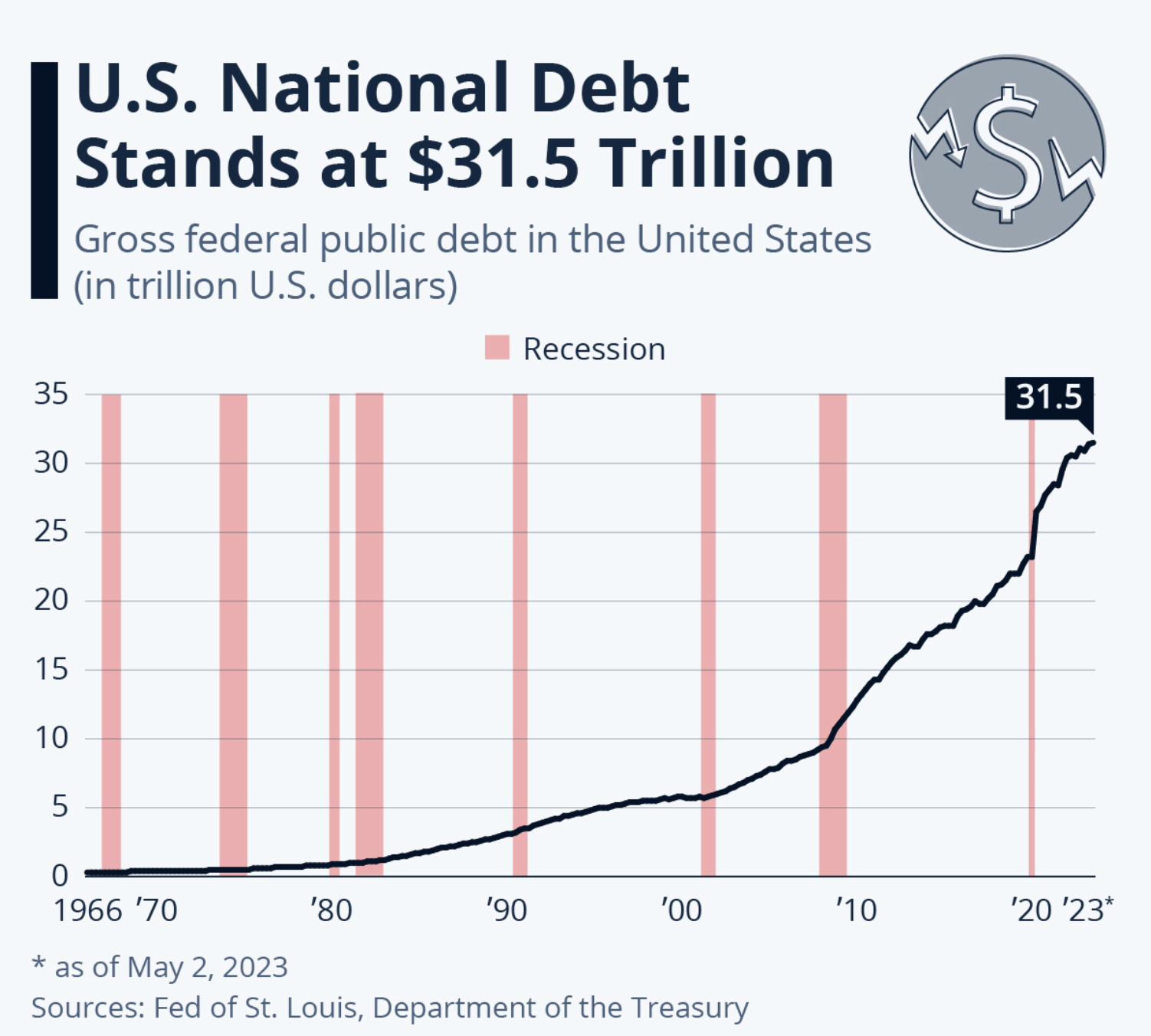
Figure 1 demonstrates how the national debt has experienced exponential growth, starting from the 1970s, after this deal was made. Thus, regardless of their relationship with the US, every country was required to hold large dollar reserves to import oil, essential to run their economies. Due to this greater demand, it helped ease inflation, as the difference between the currency’s supply and demand narrowed.
The petrodollar remains crucial for the US to maintain its grip on the global economy. It allows the country to impose strict financial sanctions by blocking access to dollars, thus providing it with leverage in negotiations/ disputes.
Following US sanctions on Venezuela in 2017, President Maduro aimed to reduce the country’s reliance on the dollar. Attempting to sell oil in Yuan and Euros, viewed by the American administration as an existential threat to their dominance.
If the petrodollar link is broken, where oil is no longer tied to the dollar, the US loses its ability to fund its national debt at low rates, and global demand for the USD could plummet.
Previous examples of dollar imperialism include:
Clearly indicating that the preservation of the petrodollar system remains a paramount objective of US foreign policy.
The United States has led the world in oil production via the Permian Basin shale boom, which is "light and sweet". However, US Gulf Coast refineries were largely engineered to specifically process "heavy, sour" crude from Venezuela. The dense, viscous oil is an essential feedstock for these facilities, which use coking and hydrocracking units to maximise the production of high-value fuels like diesel and jet fuel.
As shale oil is chemically incompatible with these heavy-oil configurations, US refiners have historically been forced to import expensive heavy crude to keep their plants running at peak efficiency. Without this, US consumers and firms would have experienced higher prices through higher rates of inflation.
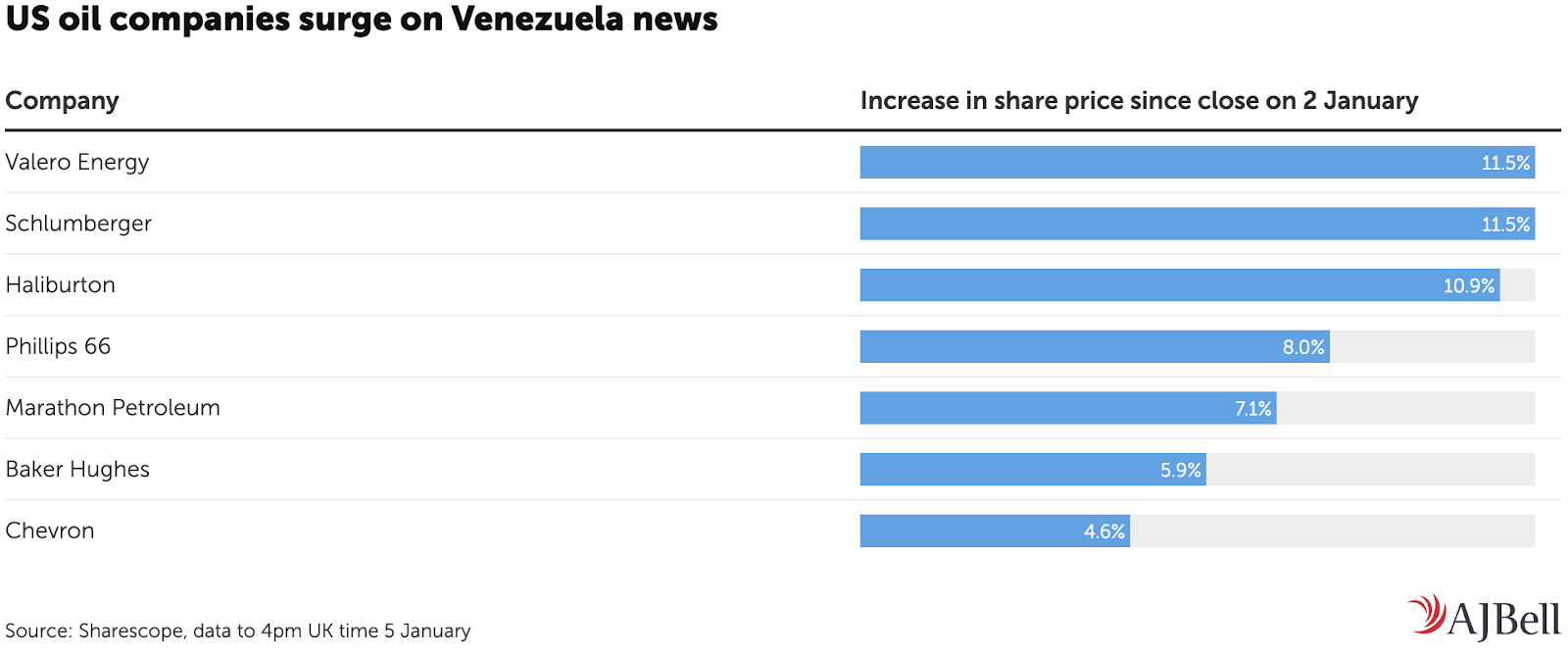
Thus, by taking direct control of Venezuela’s Orinoco Belt - home to the world’s largest proven reserves - the Trump administration aims to secure a cheap, geographically convenient supply of heavy oil barrels. Figure 2 suggests that analysts are already pricing this information into stock market valuations, with a surge in equity prices.
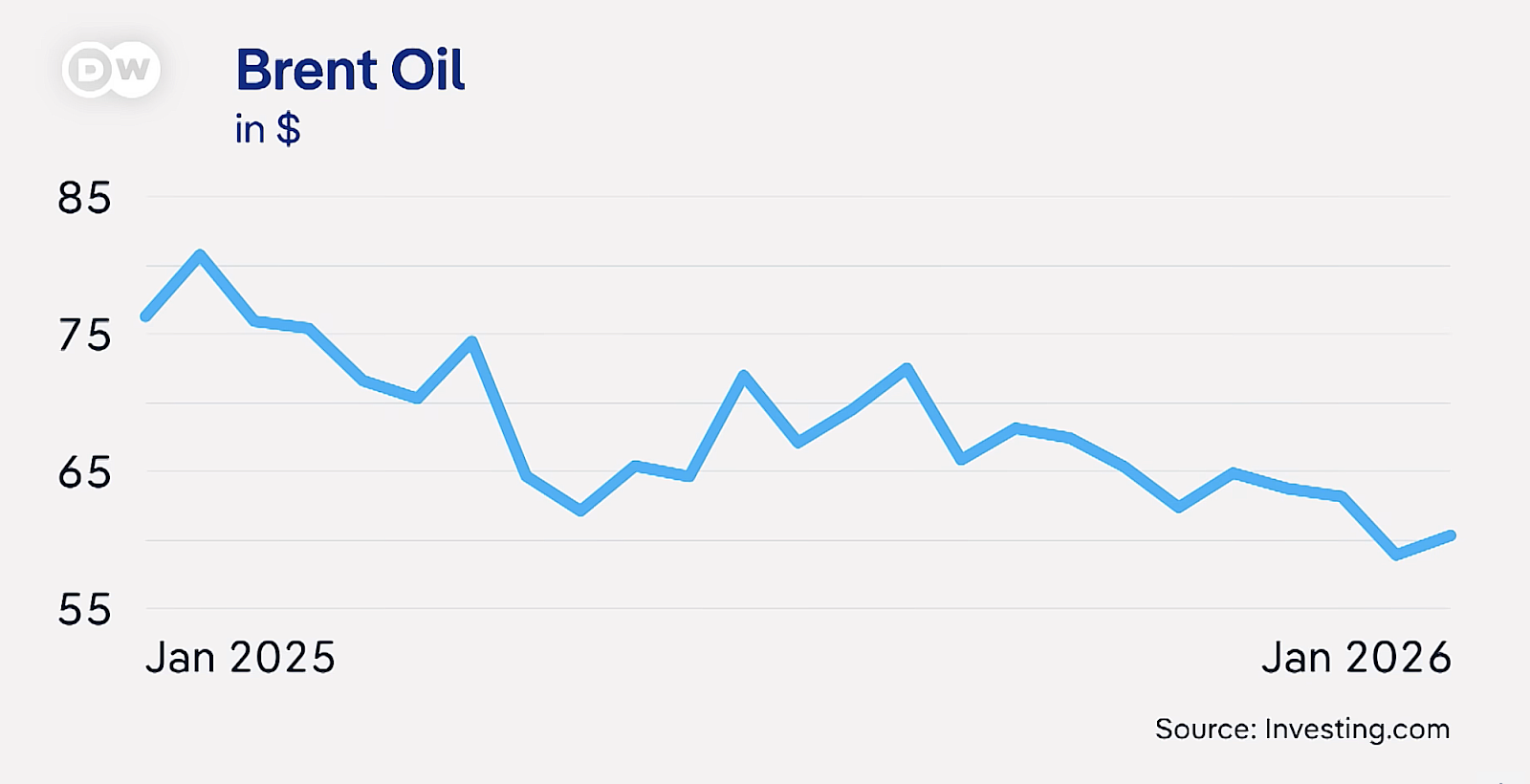
However, as Figure 3 suggests, the reaction of oil markets has been rather muted. This is because Venezuela’s proportion of global oil production is less than 1%, due to years of mismanagement and lack of infrastructure investment.
As a result, commodity markets are relatively unaffected, and even whilst factoring in future outcomes, a rise in oil supply will lead to falling oil prices, hence the mild market reaction. Focusing more on the US, it effectively solves a critical industrial bottleneck, allowing Texas and Mississippi refineries to optimise their output.
Trump’s actions towards Venezuela were not driven by short-term political gain or principles. They reflect a calculated response towards a state that had collapsed economically, experimented with ways to move money outside of U.S. control, and sat on important assets like oil.
Venezuela showed what happens when pressure is applied for long enough: governments adapt. Crypto workarounds, different trade routes, and non-Western partners didn’t help to fix the economy, but they eroded Washington’s leverage over time.
In that way, the strategy wasn’t about rebuilding Venezuela or restoring any stability. It was about shaping the conditions under which recovery would happen. Venezuela wasn’t the end goal, it was the point at which economic collapse, sanctions, shifting financial systems, and differing political views collided - and where the United States chose to reassert control before that opportunity moved further out of reach.