
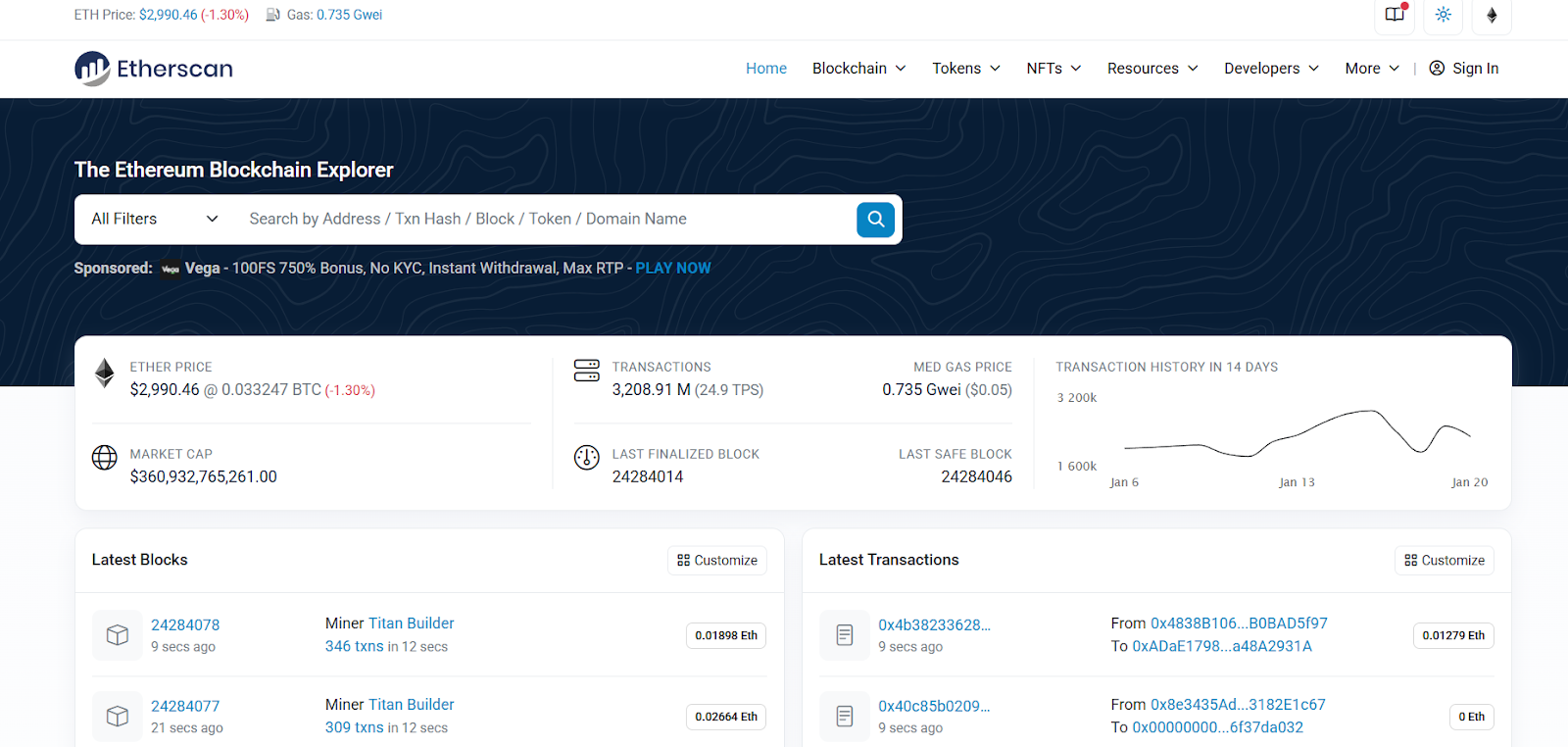
At the time of writing, a sharp selloff was triggered by macro headlines tied to Greenland-Trump developments that briefly spooked risk assets. However, on-chain whale behaviour has remained reasonably composed. This helps us to gather the fact that while prices dipped, capital didn’t leave crypto - It shifted internally.
This disconnect between price and positioning is where whale tracking becomes powerful because if custodial wallets show where liquidity sits, non-custodial whales show what liquidity is doing. This understanding of liquidity flows improves market interpretation - but how does this all actually play out on chain?

One standout example is the wallet address ‘0x28C6c06298d514Db089934071355E5743bf21d60’, in otherwords the ‘Operating Bank Account’ of Binance.
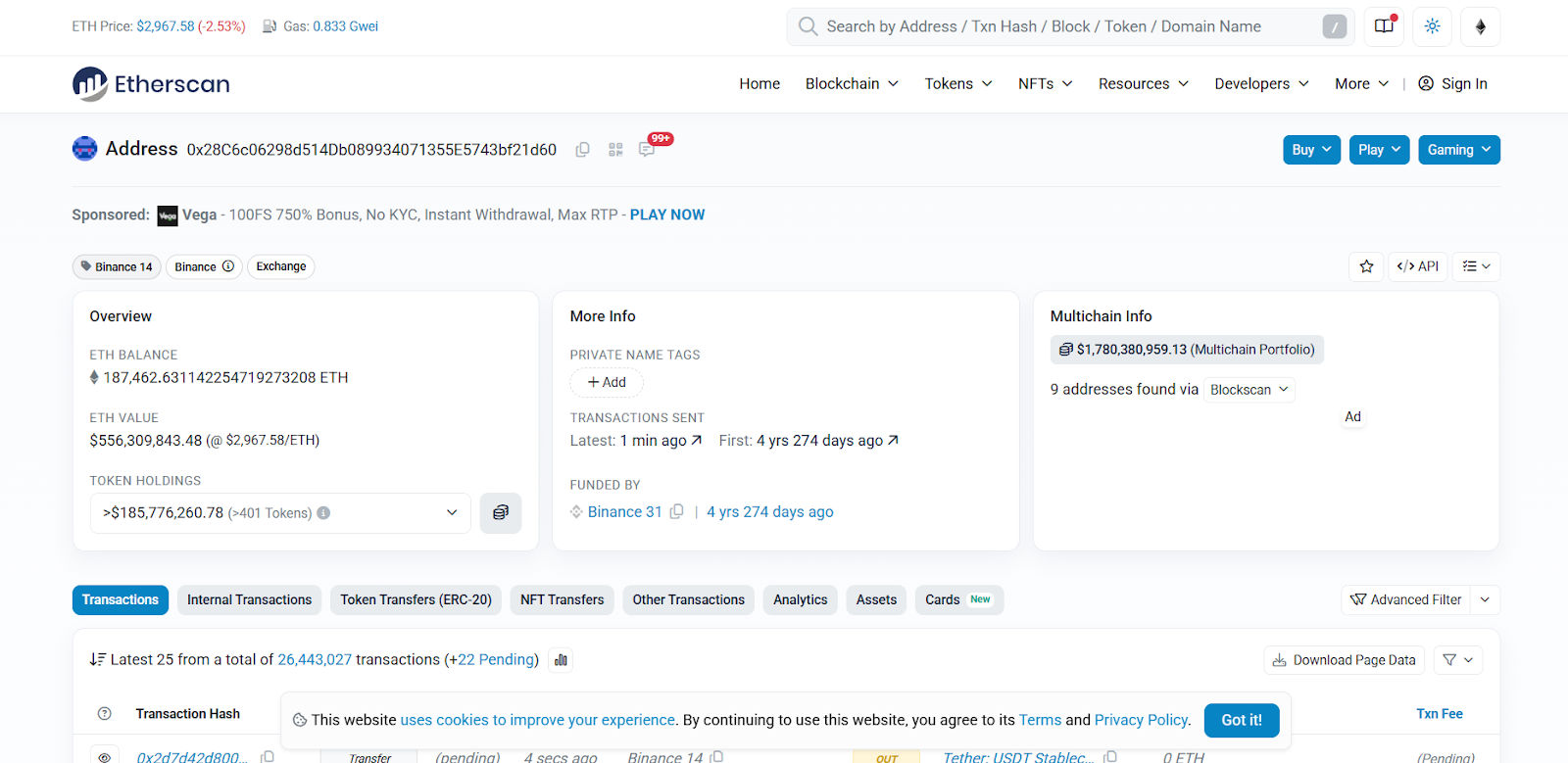
With 10,000+ transactions and a multi-year operational history (the first transaction dating back over four years, as shown on the Etherscan image above), it’s clear this wallet does not behave like a passive holder or a short-term trader. While exchange hot wallets like Binance’s are largely driven by user trades and withdrawals, they still provide useful context around liquidity concentration. Spikes in these balances often reflect shifts in where capital is being held, even if they don’t signal directional conviction. In that sense, these wallets help frame where liquidity is sitting across the market, even if they don’t explain how it is being actively deployed.
Liquidity concentration is only half the picture. To understand how liquidity gets deployed, we can also look at non-custodial whale wallets. Unlike exchange wallets, non-custodial whales are making direct decisions on-chain. For example, we can see where liquidity is sent to lending protocols, bridging, staking and decisions about allocated capital.
A clear example of non-custodial liquidity deployment can be seen in the Lido DAO treasury (Wallet address = 0x3e40D73EB977Dc6a537aF587D48316feE66E9C8c), where capital is actively allocated across staking infrastructure and protocol operations.
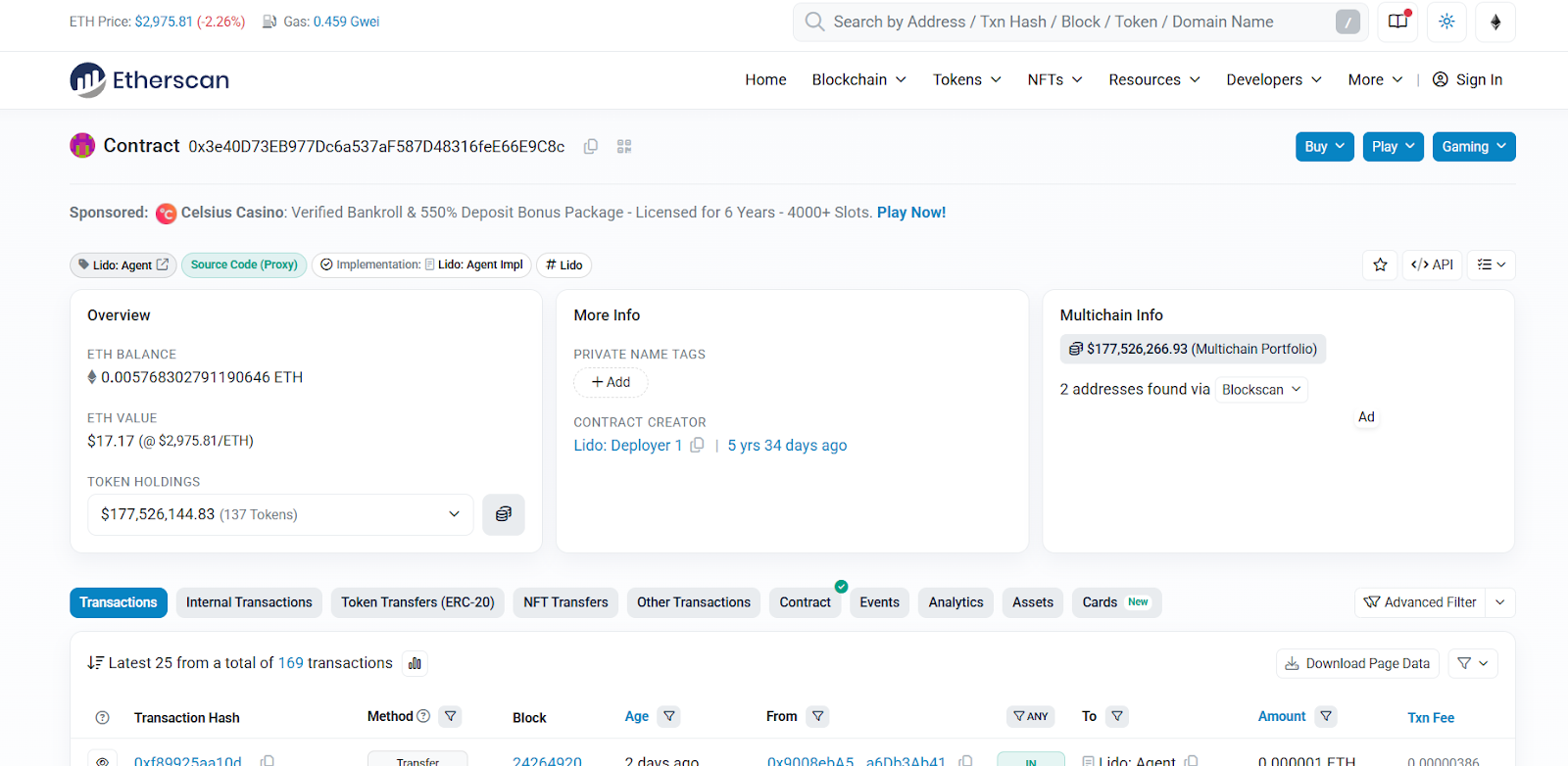
What matters isn’t the identity of any single wallet, but the pattern these accounts collectively reveal. When non-custodial whales remain active, it suggests lending, staking, and bridging capital instead of exiting to exchanges - liquidity is being repositioned within the ecosystem rather than leaving it. In periods of volatility, this behaviour can offer a clearer context than price alone, helping us to see how capital is preparing rather than reacting.
Ultimately, the value in tracking whale wallets isn’t in predicting price, but in spotting changes in behaviour. To prove this, let's deploy the following scenario:
To summarise this scenario, exchange wallets reflect where liquidity sits, but they don’t reveal how that capital is actually being used. Observing these wallets provides a clearer signal than price alone, showing whether capital is being strategically positioned within the ecosystem or withdrawn. In short, wallet behaviour uncovers the hidden flow of liquidity that price and headlines can’t fully capture.
In conclusion, markets often move only after liquidity has already repositioned. Custodial wallets show where capital sits, and non-custodial whales reveal how it is deployed - by tracking these wallets, it provides a real-time lens into the ecosystem’s positioning. This helps observers separate short-term noise from the underlying movement of capital and gain insight into how the market is preparing for its next phase.