
.jpeg)
Yvette Cooper has announced that countries like Pakistan will have their direct grant funding significantly reduced. The Foreign Secretary emphasised the need for “partnership not paternalism” when engaging as a donor to developing countries (UK reveals aid priorities after major cuts to budget - BBC News).
Aid groups criticised the “reckless” cuts and Labour MP Sarah Champion warned the approach would “make the whole world more vulnerable”. Despite this, Cooper's decision would likely find support among economists such as Paul Collier (Development Economist) and other aid sceptics, who argue that without strong institutions, foreign assistance often fails to deliver meaningful development.

For context, Pakistan is currently operating under a $7 billion IMF bailout programme, with funding released in stages and tied to reforms aimed at improving fiscal stability, tax collection, and governance. Shockingly, the government has declined an offer from the IMF to send a technical assistance mission to help implement 142 governance and anti-corruption reforms linked to the programme. In effect, Pakistan has refused external expert support designed to ensure these reforms are properly carried out. Despite this, the Finance Ministry claims that sufficient internal capacity exists to implement these reforms independently. (Govt refuses IMF help on 142 reforms).
There are several reasons to question this decision. Firstly, Pakistan has a weak implementation record, with repeated commitments to reforms often followed by limited execution, largely due to weak enforcement mechanisms. Secondly, entrenched corruption continues to undermine institutional effectiveness, with multiple thinktanks highlighting diluted reforms and fragile accountability structures. These factors suggest that technical capacity alone is insufficient without credible enforcement and oversight.
That being said, some credit is due. Pakistan has taken steps to strengthen money laundering investigations, improve suspicious transaction reporting, and enhance transparency. One way is through the planned publication of asset declarations of senior civil servants from 2026, supported by risk-based verification. These developments indicate some progress. However, they remain marginal in the face of deeper systemic challenges.
Corruption continues to be a principal hindrance to long-term development. The concept of “state capture” describes a situation in which public policy is shaped to benefit a narrow group of political and economic elites. This familiar pattern of bottleneck institutions and entrenched inequality is particularly evident in Pakistan. The Governance and Corruption Diagnostic Assessment (2025) found that dysfunctional institutions are unable to enforce the rule of law or safeguard public resources, describing corruption as “persistent and corrosive”, distorting markets, eroding public trust, and undermining fiscal stability. It further highlights how structures based on “elite privilege” continue to dominate key sectors of the economy, making corruption especially damaging (Al Jazeera).
The scale of this issue is significant. Estimates suggest Pakistan could achieve 5-6.5% higher economic growth if it successfully implemented recommended reforms. Yet not only has Pakistan rejected external support to assist with these reforms, but its entrenched system of corruption and weak institutions also continues to block meaningful progress, at least in the short term.
At the heart of the IMF’s findings lies the idea of “state capture”, where corruption is not an exception but a defining feature of governance. According to the IMF, Pakistan’s state apparatus is often used to benefit specific groups at the expense of the wider population. “Elite privilege” - including preferential access to subsidies, tax relief, and state contracts - drains billions of dollars from the economy annually, while tax evasion and regulatory capture discourage genuine private sector investment. Similarly, a 2021 UNDP report describes how Pakistan’s economic system has long favoured politically connected actors who secure “preferential access to land, credit, tariffs and regulatory exemptions.”
Thus, with corruption so deeply embedded, the question is not whether it matters but how it can be realistically addressed?
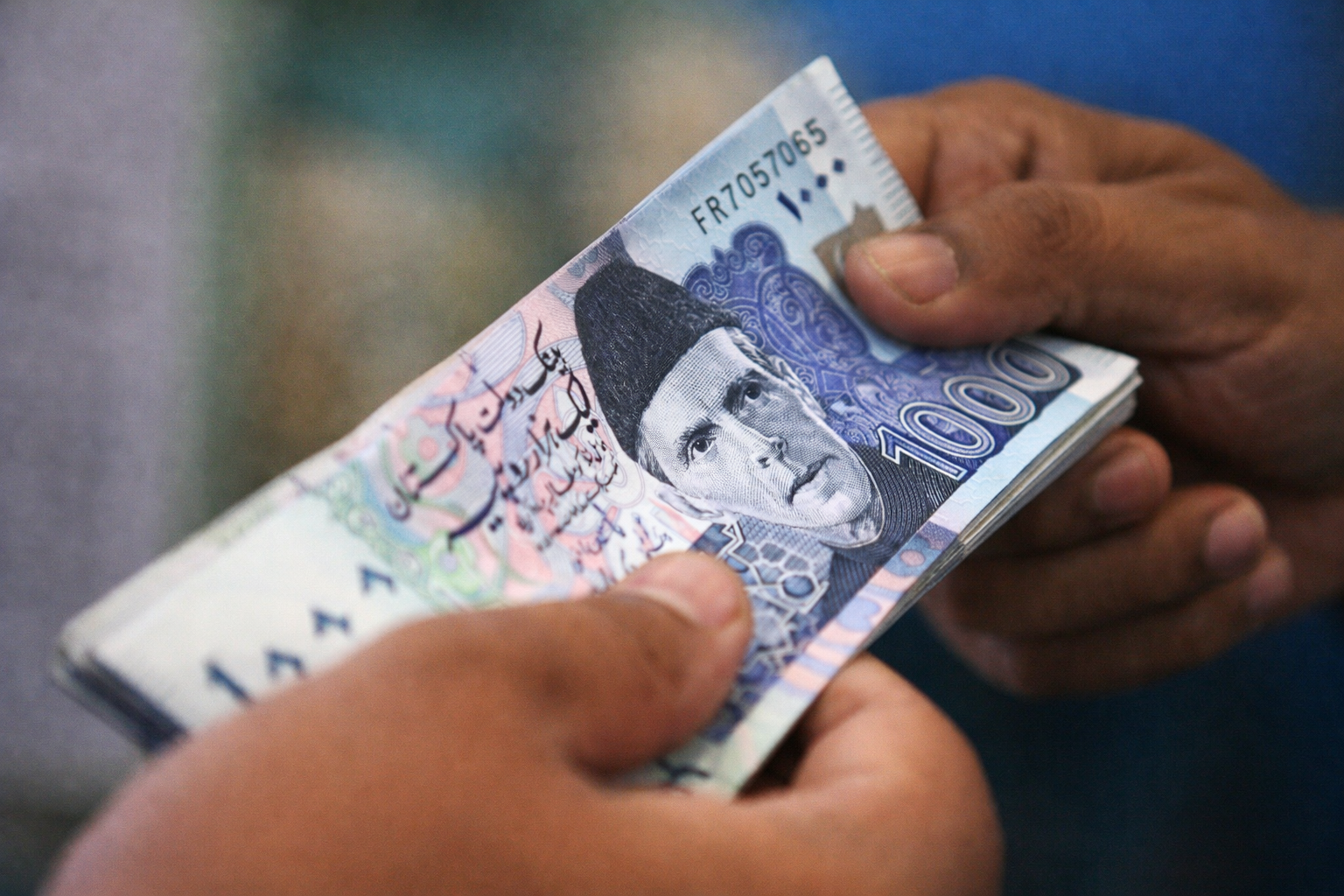
Foreign aid is often presented as a solution to entrenched corruption and underdevelopment, but its effectiveness is far more complex in practice. Over the past decades, donor countries have transferred billions of dollars to developing economies in an effort to reduce poverty and promote growth. While these efforts are grounded in the expectation that financial support can help countries escape poverty traps, the results have been mixed.
Critics argue that aid can sometimes weaken governance by reducing the incentive for governments to build strong tax systems, improve accountability, and undertake necessary institutional reforms. As Paul Collier argues in The Bottom Billion, aid can be beneficial, but only when it is carefully targeted and aligned with broader institutional development.
A key issue is the fungibility of aid, the idea that money is interchangeable and is assumed to fund the specific projects donors intend. Governments may instead redirect their own resources elsewhere, meaning aid replaces rather than supplements domestic spending. As a result, the overall increase in public investment is often smaller than expected, and the intended benefits of aid are not fully realised. In environments characterised by corruption and weak governance, this raises serious doubts about whether aid can effectively address structural problems. Rather than resolving inefficiencies, poorly designed aid risks reinforcing them.
Pakistan’s economic challenges are not simply the result of limited resources, but of persistently weak institutions. Recent analysis highlights a form of “institutional poverty”, where the absence of strong, predictable, and resilient systems prevents the country from effectively managing shocks or sustaining long-term growth. This is reflected in rising poverty levels, which increased from 21.9% in 2018-19 to 28.9% in 2024-25, underscoring both economic strain and institutional failure.
Beyond income measures, deeper structural issues persist. In many contexts, local governance remains fragile, with capacity constraints affecting a significant share of subnational institutions.
Labour markets are still largely informal, with an estimated 60-80% of workers lacking formal protections in some developing economies. Planning and accountability systems also remain weak, limiting effective service delivery. Economic management tends to be reactive rather than forward-looking, leaving countries vulnerable to recurring shocks, including climate-related disruptions and macroeconomic instability, which have increased in frequency over the past decade. In agriculture, where livelihoods are highly exposed, fewer than 20% of smallholder farmers have access to crop insurance or similar risk protection mechanisms. As a result, many households continue to rely on inconsistent, donor-driven support rather than stable, institutionalised systems.
These weaknesses also distort the broader economy. Remittances now account for nearly 10% of GDP, at times rivalling export earnings. Reliance on these masks deeper structural problems, such as idle industrial capacity and high unemployment. In this context, foreign aid is often less effective than intended. Weak accountability allows funds to be misallocated or to replace, rather than supplement, domestic spending. Consequently, aid fails to address the root causes of underdevelopment and may even reinforce existing inefficiencies. This underscores the importance of strengthening institutions, particularly in taxation, governance, and legal enforcement, so that resources are used productively and sustainable economic growth can be achieved without overreliance on external support (www.lokmattimes.com).
Ultimately, the case of Pakistan underscores that the challenge is not simply one of financing, but of governance. Evidence from other developing economies shows that higher public spending does not automatically translate into better living standards when institutions are weak. For example, research on Nigeria finds that corruption, misallocation, and poor implementation can significantly dilute the impact of government expenditure, particularly in the short term.
This carries a clear lesson for Pakistan as it continues its engagement with the International Monetary Fund. Financial support and fiscal adjustments, while necessary, are not sufficient on their own. Without stronger institutions to ensure accountability, transparency, and effective delivery, both domestic spending and external assistance risk falling short of their intended outcomes.
In this sense, the limits of IMF-led stabilisation become apparent. Sustainable improvements in living standards will depend less on the scale of funding and more on the depth of institutional reform. Addressing corruption, strengthening governance, and improving policy execution are therefore not complementary goals, but essential preconditions, highlighting why external assistance cannot substitute for structural change.