.png)
Picture walking into a Tehran currency exchange where the digital board simply reads "0.00 USD" next to the rial. Not a technical glitch. The systems genuinely weren't programmed to handle numbers this catastrophic. Iran's rial trades around 1.47 million to the dollar, having shed roughly 20,000 times its 1979 value. This isn't just inflation. This is what happens when an entire economy becomes a rewards programme for political allegiance.
The Islamic Revolutionary Guard Corps doesn't merely dabble in business. It operates a shadow state within the state, controlling anywhere from a tenth to over half the Iranian economy through subsidiaries spanning telecommunications, construction, energy and banking. Sanctions paradoxically strengthened this network. When Western firms evacuated and Iranian companies foundered, IRGC-linked entities possessed the foreign currency access, informal trading routes and security protection to thrive under restrictions.
This creates a peculiar economic death spiral. Resources flow not toward productivity but toward political loyalty. Import licences and dollar access depend on Revolutionary Guard connections rather than business viability. The currency doesn't represent economic output anymore. It represents the erosion of an economic system replaced by patronage networks wrapped in military fatigues.
When Tehran's Grand Bazaar traders shuttered their shops in late December 2025, it signalled something profound. The bazaar traditionally supported the regime. These weren't revolutionaries but pragmatists who'd navigated decades of turbulence. The government projects basic goods prices will rise 20 to 30 percent in coming weeks after ending subsidised dollars for imports. Triple digit inflation meets over 48 percent of Iranians experiencing some level of malnourishment. Protesters no longer chant about foreign enemies. They specify that their "enemy is right here."
The Revolutionary Guard's economic stranglehold reveals something most analyses miss. Currency collapse isn't primarily about sanctions or monetary policy. It's about the fundamental incompatibility between military economic control and market mechanisms. When access to resources depends on political loyalty rather than productive efficiency, money eventually stops meaning anything at all.
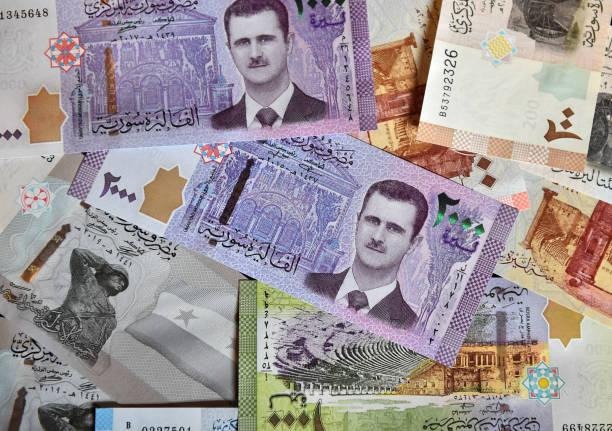

Syria took a different approach entirely. On New Year's Day 2026, fresh banknotes entered circulation featuring mulberries, oranges, olives and wheat. Gone were the Assad family portraits that glowered from currency for five decades. The redesign slashed two zeros, transforming 100 old pounds into one new pound.
Syrian leader Ahmed al-Sharaa described the move as marking the end of a previous phase and beginning of a new era. The symbolism practically screams from the agricultural imagery. Yet since the civil war began in 2011, the pound collapsed from approximately 50 to about 11,000 against the dollar. Syrians previously lugged enormous bundles of cash for basic shopping. The Central Bank held just 200 million dollars in foreign exchange reserves by late 2025, down from 17 billion in 2010.
Here's what makes Syria's currency launch fascinating. It's simultaneously radical and meaningless. Radical because removing Assad imagery from money represents genuine political transformation in a region where such changes typically arrive via violence. Meaningless because removing zeros doesn't impact the currency's underlying value.
Syrian President al-Sharaa stated this explicitly. "Changing the zeros and removing two zeros from the old currency to the new currency does not mean improving the economy," he acknowledged. "Improving the economy depends on increasing production rates and reducing unemployment rates." The honesty is refreshing. The challenge is whether new institutions can function differently from old ones rather than merely appearing different on banknotes.
The timing matters. The United States permanently lifted Caesar sanctions whilst Gulf states including Qatar and Saudi Arabia committed billions in financial support. Syria gets a 90-day transition period where both old and new currencies circulate without exchange commissions. The infrastructure for potential recovery exists.
Whether that potential becomes reality depends on factors far beyond currency design. Can the banking system actually function? Will production increase? Can unemployment fall? A currency is ultimately a promise about the future. Syria's new pound represents a promise yet to be tested.
These parallel currency crises illuminate something profound about how money actually works. Iran's rial dies slowly through institutional corruption, where military economic control diverts resources according to political alignment. The currency becomes meaningless because the underlying economy no longer functions as a market but as a loyalty distribution system.
Syria's pound attempts resurrection through symbolic and technical change. Agricultural imagery replaces dictator portraits. Zeros vanish. Yet the substance question remains unanswered. Can new leadership actually separate economic and political power? Or will patronage networks simply reconstitute under different flags?
The contrast reveals something most economic analysis misses. Currency stability isn't primarily about central bank policies or exchange rate mechanisms. It's about whether economic institutions can operate independently from political power structures. Iran demonstrates what happens when they can't. Syria demonstrates the attempt to make them separate.
Currencies ultimately represent collective belief in future value. Iran's trial represents a broken promise maintained through force, surveillance and Revolutionary Guard control. Syria's new pound represents a promise yet to be proven, agricultural imagery suggesting fertility and growth that production rates must eventually validate.
The difference between currency collapse and currency hope may depend less on monetary policy than on whether economic power can be separated from political and military control. Iran shows what happens when that separation never occurs. Syria shows what happens when a society attempts that separation after decades without it. One currency dies through strangulation. Another attempts birth through symbolism.
Whether symbolism becomes substance depends on the years ahead. The banknotes are printed. The promises are made. The test arrives when Syria determines whether political transformation can translate into economic transformation, or whether new agricultural imagery simply decorates the same old patronage networks with fresher, greener paint.