
.png)
India is set to launch its own central bank digital currency (CBDC), backed by the Reserve Bank of India (RBI). The announcement was made by the Union Minister of Commerce and Industry, Piyush Goyal, during his visit to Doha. This marks a pivotal moment in the evolution, or rather deviation, of cryptocurrency, standing in stark contrast to its founding ideals of transparency and equity.
The RBI-backed digital currency aims to leverage blockchain technology for faster, safer, and more transparent transactions. However, the drawbacks associated with governmental control and oversight cannot be ignored. India’s CBDC will allow authorities to track and verify every transaction, a feature Goyal promoted as a means to curb illegal activity.

Bitcoin, the world’s first blockchain currency, was initially created as a peer-to-peer system free from government control, directly contradicting what India is attempting to do. India is not alone in this pivot, with China banning Bitcoin trading and mining while simultaneously rolling out the digital yuan, currently the world's largest CBDC. Authoritarian-leaning governments are rejecting decentralized cryptocurrencies while embracing centralized digital currencies that expand their surveillance capabilities, with CBDCs allowing governments to record every transaction on a controlled ledger.
The adoption of CBDCs by governments is a critical point in the world of cryptocurrency and raises the question of whether these new cryptocurrencies are a way for governments to participate in the evolving web3 scene while still maintaining control over a supposedly decentralized system.
India's CBDC launch is paradoxical in nature. According to Chainalysis' 2025 Global Crypto Adoption Index, India ranks first globally in cryptocurrency adoption, leading every measured category, including retail trading, DeFi usage, and institutional investment.
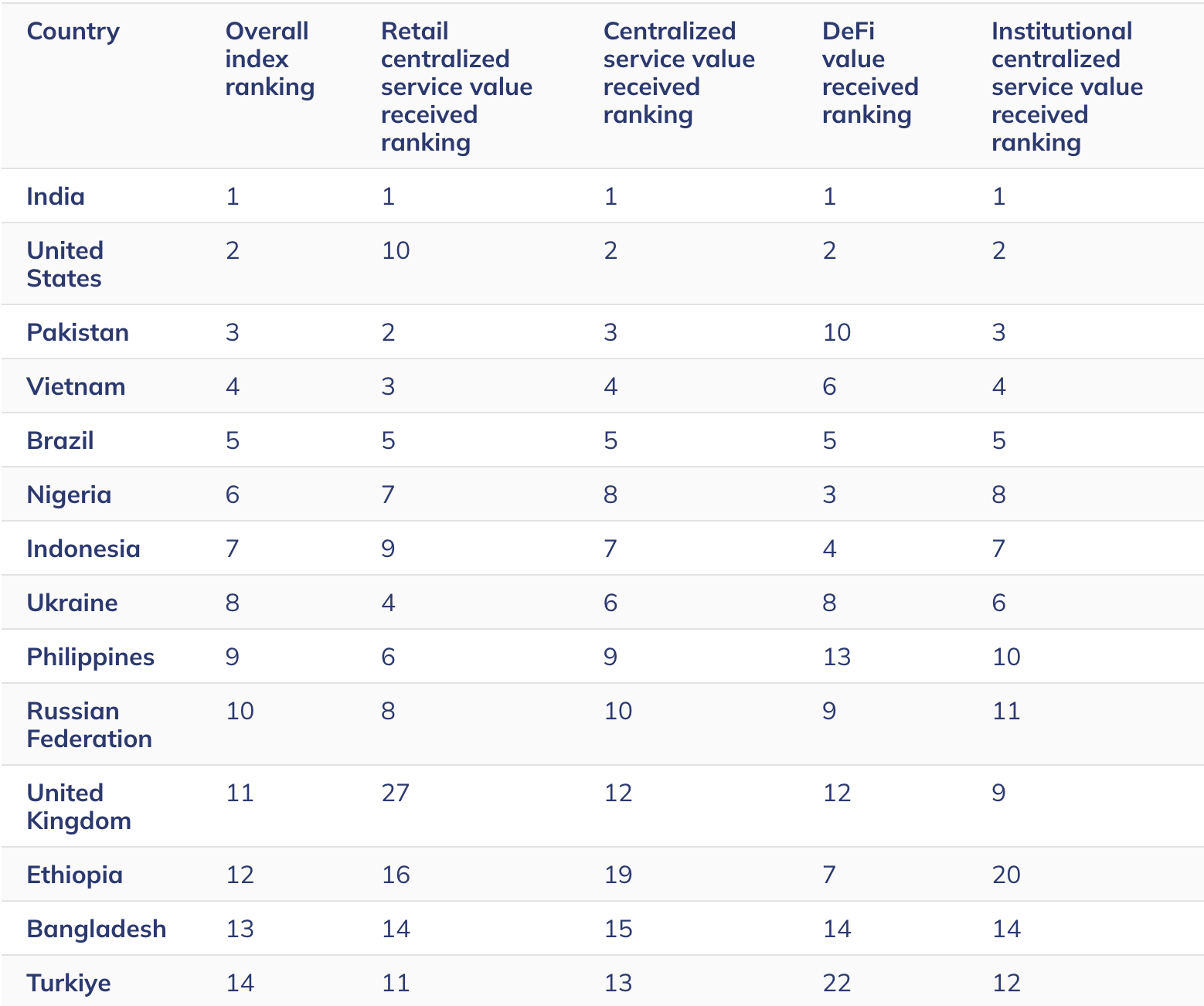
The Indian population has embraced decentralized cryptocurrencies, yet their government is rejecting those same cryptocurrencies while building a state-controlled alternative that departs from traditional cryptocurrency.
India’s contradiction runs deep. Goyal made the country’s stance explicit during his Doha announcement, stating that the government has "not been encouraging cryptocurrency which does not have sovereign backing or which is not backed by assets." The government has reinforced this hostility through punitive taxation, including a 30% tax on crypto gains plus a 1% transaction deduction tax, which appears designed to discourage trading.
Despite this, Indian citizens continue to lead the world in crypto activity, seeking financial alternatives outside the traditional banking system.
India is the world’s most populous democracy and has the world’s most enthusiastic crypto population, giving it significant influence globally in cryptocurrency decisions and policy making. If it can successfully transition its crypto-enthusiastic population to a CBDC, it would demonstrate that the model works even in resistant markets.
India's combination of crypto hostility and CBDC adoption could become a template for other developing countries to follow. Developing nations often lack the resources to build sophisticated crypto regulation, but with India’s straightforward approach to discouraging cryptocurrency adoption through high taxes and CBDC implementation, other countries may be able to replicate its model.
As governments push their own alternatives, increased regulatory pressure could erode confidence and limit accessibility in the decentralized space. However, this same pressure might counterintuitively make decentralized crypto more appealing to individuals concerned about surveillance and privacy issues.
We have been using the same form of currency for thousands of years, so it makes sense that in a modern world we adopt a modernized form of currency. Traditional cryptocurrencies would be the ideal standard for crypto purists who argue that CBDCs are detrimental to the scene due to the drawbacks of government control and backing.
The continued adoption of CBDCs will have a long-lasting effect on the cryptocurrency space in the coming years, with governments seeming to want to reap the benefits of the expanding web3 scene while maintaining control.
India's reluctance to accept cryptocurrency is nothing short of a blunder. Having the world's most enthusiastic crypto population and not using it to its advantage limits the country’s potential to lead the global digital economy.
I believe that India could become the next crypto capital of the world, but if it continues with flawed policies and alternatives that some argue are not even real cryptocurrencies, it risks falling behind nations willing to embrace genuine decentralization.