
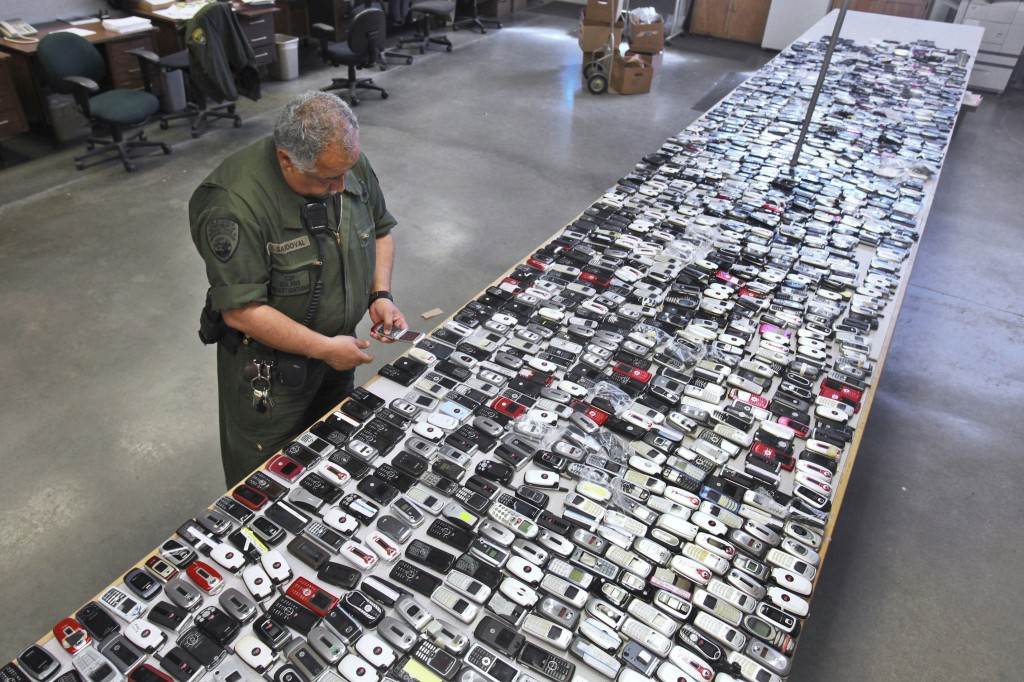
• Economic Adaptation: Scarcity and policy neglect push inmates to build complex informal economies, from ramen-based trade in the US to inmate-run fiscal systems in Brazil.
• Institutional Failure: The extreme conditions in places like Curado show how overcrowding and weak governance allow organised crime to replace state authority.
• Broader Insight: Prison markets act as microcosms of real economies, revealing how people respond to incentives and why these systems should inform policy and public understanding.
“The degree of civilisation in a society can be judged by entering its prisons” - Fyodor Dostoevsky
The hum of a distant desk-fan. Uninviting concrete walls. An unsettling silence echoes through the drab halls of a prison at night.
However, the tranquillity is misleading. As the lights go out, an illicit economy springs to life. Markets that thrive on resourcefulness, where cash is contraband but ingenuity is king.
Such illicit economies catalyse a surplus of crime in institutions intended to rehabilitate, but they are more than an esoteric curiosity. Over 11.5 million people are incarcerated internationally, and illicit economies have been reported as a pervasive and inevitable “way of life”, with the drug trade in UK prisons alone being a billion-pound business.
This article aims to audit this hidden world of scarce resource allocation, breaking down how policy shifts and cultural differences impact these informal economies, upending conventions and affecting the lives of millions. We take a look at the rise of ramen as a currency in US prisons, an inferior substitute for more traditional cigarettes, at a time of reduced funding. This is then contrasted to the organised crime underpinning the extensive economies of Brazil’s Complexo do Curado, analysing the cultural factors driving informal trade. Finally, we’ll dissect what lessons we can take away from illicit economies and explore their intricacies as representative, scaled-down simulations of larger economic systems.

In 2016, the Washington Post published an article based on a study by Michael Gibson-Light of the University of Arizona School of Sociology. Titled “They’ll kill for it”, the article unpacks Gibson-Light’s statistical and interview-based research into the growing prevalence of ramen in US state-run facilities as a black-market currency. Being durable, available in “denominations”, and its portability allowed it to fulfil the characteristics of an effective medium of exchange, particularly spurred by its cheap yet calorie-rich nature.
In recent years, ramen has grown in popularity as a currency for bartering for other goods and services in prison. Even replacing the traditional cigarette as a stake in gambling, this prolific rise prompts questions about the drivers behind this recent growth in popularity.
Gibson-Light also investigated this question, asking several prisoners about their proposed reasons for this shift in temporary currency within the institutions. The response was surprising: many inmates believed that soup (instant ramen packets) was the best high-calorie substitute to worsening prison food that was “inedible or too little to sustain them for a day”. This was likely a direct consequence of systemic decade-long cost-cutting throughout US states, beginning with a 5.9% decline in average state corrections spending (identified by the Federal Bureau of Prisons) from 2008 to 2009, and including effects of local prison food provider switches, deteriorations in hot meal volumes, and a general combination of austerity and privatisation at the time. As such it is reasonable to conjecture this cumulative effect drove the rise in ramen popularity; tangentially a product of this observation is the potential proposal of a metric to identify the effect of fiscal decisions on inmates, a naturally underrepresented minority, with correlations between spending movements and prisoner behaviour.

The elasticity of ramen’s significance following policy shifts may be less pronounced, however, considering its significance in prisons since decades prior. The food dates back to 1958, when it was invented by Momofuku Ando and his firm Nissin Foods. Whilst in retrospect its success as a global staple can be accredited to his innovation as a pioneer, at the time he may not have anticipated his creation to end up as far reaching as a medium-of-exchange in penitentiaries. Evidence points to ramen’s jailhouse prevalence since before policy shifts, such as in an ethnography of San Francisco County Jail from 2008, where inmates used dried ramen noodles as “spreads” - a form of necessary gastronomical escapism from the monotony of prison food.
Like their official counterparts, noodle currency fluctuates in value, stimulated by volatile market forces not dissimilar to those driving FOREX markets. They’re also vulnerable to inflation imported from the outside world, often subject to sudden price rises. For example, the average price for a Maruchan instant ramen serving, although generally $0.20 in the supermarket, is around $0.65 in US prisons. Considering the average hourly wage of a prisoner in a state such as Louisiana to be $0.06, and even the best-paid jobs only reach an hourly $0.52, these steep prices show the perceived value of a comparatively greater source of sustenance (Florian Zandt, 2024).
Ultimately, whether it is ramen, cigarettes, or another inferior good, the incarcerated population has repeatedly shown its capacity for emulating the economy beyond its fences.
Turning our attention now to South America, many prisons on this continent are equally noteworthy. For this article, we travel to Brazil’s eastern coast. In the state of Pernambuco lies Complexo Prisional do Curado: a notorious prison famous for the unique way in which it is run and the abhorrent state of its human rights. Whilst the state controls the borders, inside the prison, it’s a completely different story.
Here, inmates essentially run the institution: “chaveiros” or keyholders rent out “barracos” - small, often rudimentary cubicles for shelter - at varying prices contingent on numerous factors. The rent may range from R$500-2500, and there is often a weekly tax added onto this, creating a multifaceted “fiscal” system that grants the keyholders power and responsibility. They give out microloans and credit, enforcing debt-collection with violence and hired force, even extending to outside the prison. A prison entirely controlled by its inmates. The consequence? Deaths of 97 inmates from 2008 to 2011, including 55 from violence (Human Rights Watch, 2015).
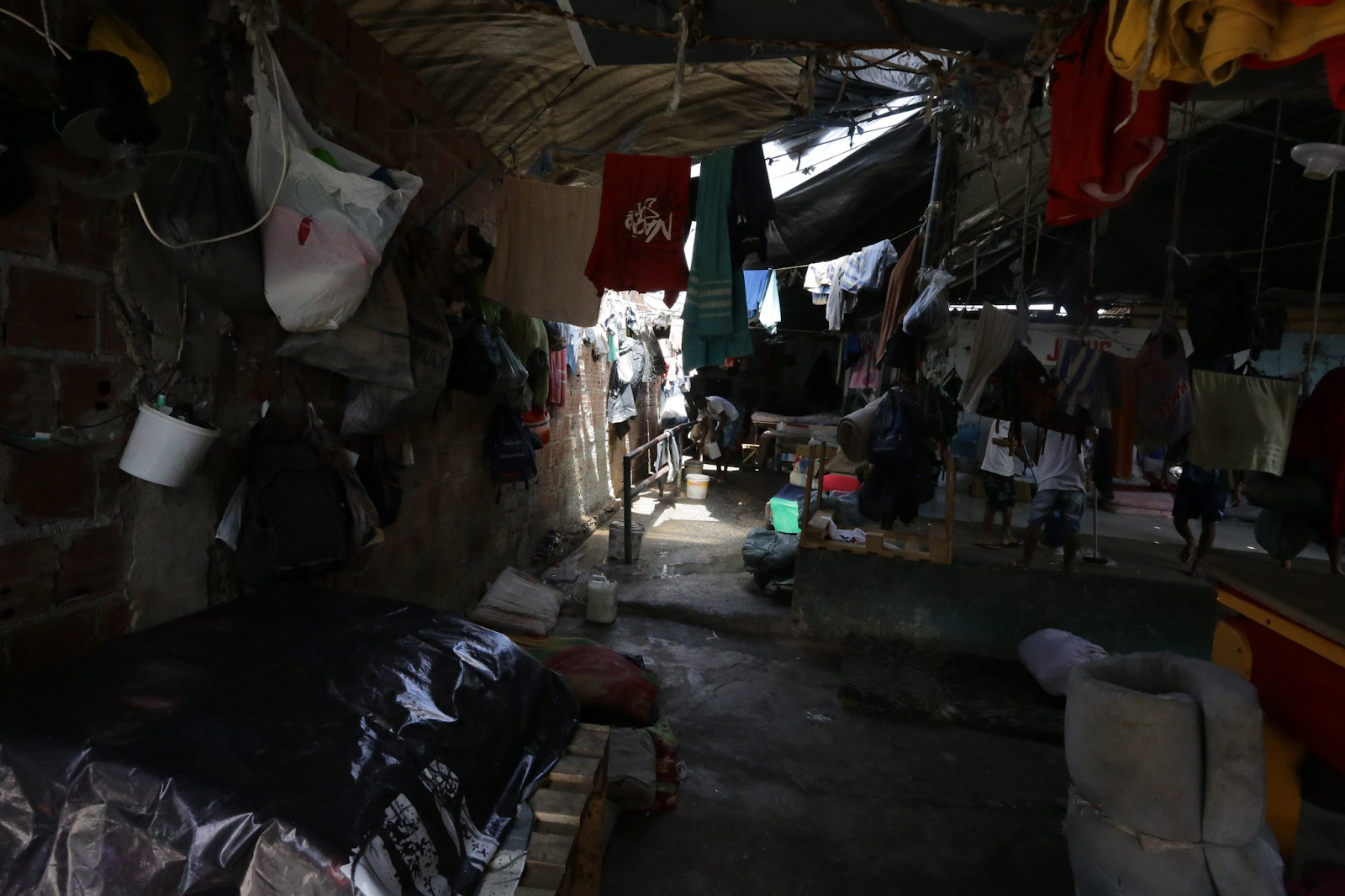
To truly understand the complexities of Curado, we must establish the conditions that have driven it to its current state. Long-term negligence by the state has led to incredibly cramped conditions and rampant overcrowding, compounded by a lack of trained staff. Over 7000 men are continuously incarcerated there, over triple its intended capacity. A guard-to-prisoner ratio of 1:31 shows the extent of this issue when compared to national policy benchmarks of 1:5. Nearly 60% of the inmates are pre-trial detainees, contributing to this overpopulation that resulted in authorities providing the keyholders with their privileges (International Human Rights Clinic, 2015).
Overall, the massive scale of the Curado illicit economy is both an economic marvel and a humanitarian disaster engendered by political failures. Whilst interventions by international bodies such as the Inter-American Court in 2012 attempted to raise awareness and improve the situation in the facility, they have been futile in the long run. Curado is unfortunately one of many prisons in South America overrun by gangs, with flourishing illicit economies, and host to abysmal living standards.
The illicit, informal economies that emerge in prisons demonstrate the resilience of markets even in the absence of liberty and with far more limited resources. They further reinforce the tenacity of economic agents, who continue to trade, innovate, and even commit crime, and perhaps this ultimately speaks to something innate about human behaviour. Understanding these prison economies may be key to simulating actual economic environments: to identify characteristics of an effective currency look no further than durable, storable and divisible instant ramen, offering calorific incentives following regime shifts and growing scarcity.
In contrast, political negligence with regards to Brazil’s Complexo do Curado has driven a humanitarian crisis, resulting in violence, homicide and poor health in an institution designed for rehabilitation. Such shortcomings reflect both the societal mistakes, and in accordance with Dostoevsky’s belief, the struggling civilisation that caused them in a rapidly developing economy. Such a societal mirror is perfect to inform policy. If we are to gauge the efficacy of a central bank’s decision, observe the price of prison ramen. To evaluate fiscal stimulus, interview the staff.
Ultimately, with millions incarcerated around the world, the scale and effects of illicit economies aren’t trivial. Neither should our attitude towards them be. A mirror of society, a microcosm of the economy. Should we be paying more attention to our prisons?