
For most of the world, democratic elections at both local and national government levels, as well as within individual organisations, still predominantly utilise inefficient paper-based voting systems. These are costly, slow, prone to mistakes, and susceptible to fraud.
Digital, on-chain voting and Decentralised Autonomous Organisations (DAOs) pose as alternatives and have the potential to be an entirely new legal structure for companies.
Whilst democratic governments may still exist, the global infrastructure which everyone depends upon may well be centrally controlled by unelected big tech companies. Decentralised Physical Infrastructure Networks (DePINs) could serve as an alternative to centralised control of this infrastructure.

DAOs are code-based organisations that operate exclusively through blockchain; the rules of the organisation are enforced by smart contracts (self-executing code) established by the founders. These ensure a secure and immutable network.
Any changes to the network are voted upon by members of the DAO. Votes are submitted using on-chain governance tokens. Exact voting mechanics vary; in general, each token represents one vote, so holders with more tokens have proportionally greater influence over decisions. Most of the time, these tokens are also native cryptocurrency tokens; however, non-transferable, governance-only tokens can be used.
DAOs are able to coordinate many activities like investing, crowdfunding, and managing shared treasuries for businesses, nonprofits, and online communities. They create a transparent, trustless system that can’t be shut down by any individual or external entity.
Don’t assume DAOs are only small operations; the decentralised structure lowers the barrier to entry for global participation. In fact, Uniswap and Mantle DAOs each command approximately $3 billion in reported holdings.
DAOs are not yet universally recognised as a standalone legal form. Instead, many DAOs are ‘wrapped’ into existing entities such as limited liability companies (LLCs), foundations or cooperatives.
Conceptually, DAOs are similar to cooperatives, with member ownership, democratic governance and a focus on collective benefit. However, they have added benefits from being borderless and are more heavily automated.
At present, few DAOs are choosing to set up in the UK, due to a less clear legal framework than overseas. As DAOs become increasingly more mainstream, the government should review whether it can introduce a DAO-specific legal entity to encourage more innovation at home.
When understanding DePINs, we must first be aware of the Internet of Things (IoT). This refers to all physical devices connected to a network, from smart energy grids to appliances to drones. DePINs move these IoT networks onto open-source blockchains.
Currently, the vast majority of IoT networks are controlled by Big Tech companies such as Amazon, Meta, Microsoft and Google. As tech evolves, these networks are managing more vital services such as healthcare, energy and transport, which makes us dependent on these networks.

Unfortunately, these networks aren’t always resilient. Back in November 2025, Cloudflare suffered a roughly six‑hour global outage after a permissions change in a database generated an oversized file that exceeded software limits. Core services failed, bringing down major platforms like X, ChatGPT and Canva.
Beyond the low resilience from having a single point of failure, individuals get no say or control in how these networks operate. If current trends continue, it is likely that big tech companies will have far greater control over our lives.
At present, these companies already have major control over user data, impacting user privacy. Fees are set to optimise corporate profit and are often charged for acting as intermediaries and taking a share of others’ work. Services can be restricted and/or denied as the company pleases.
DePINs make physical infrastructure cheaper and more resilient, benefiting users. They can also conveniently make transactions faster through automated machine-to-machine transactions. For example, an electric car can automatically pay a charging station for the electricity it takes.
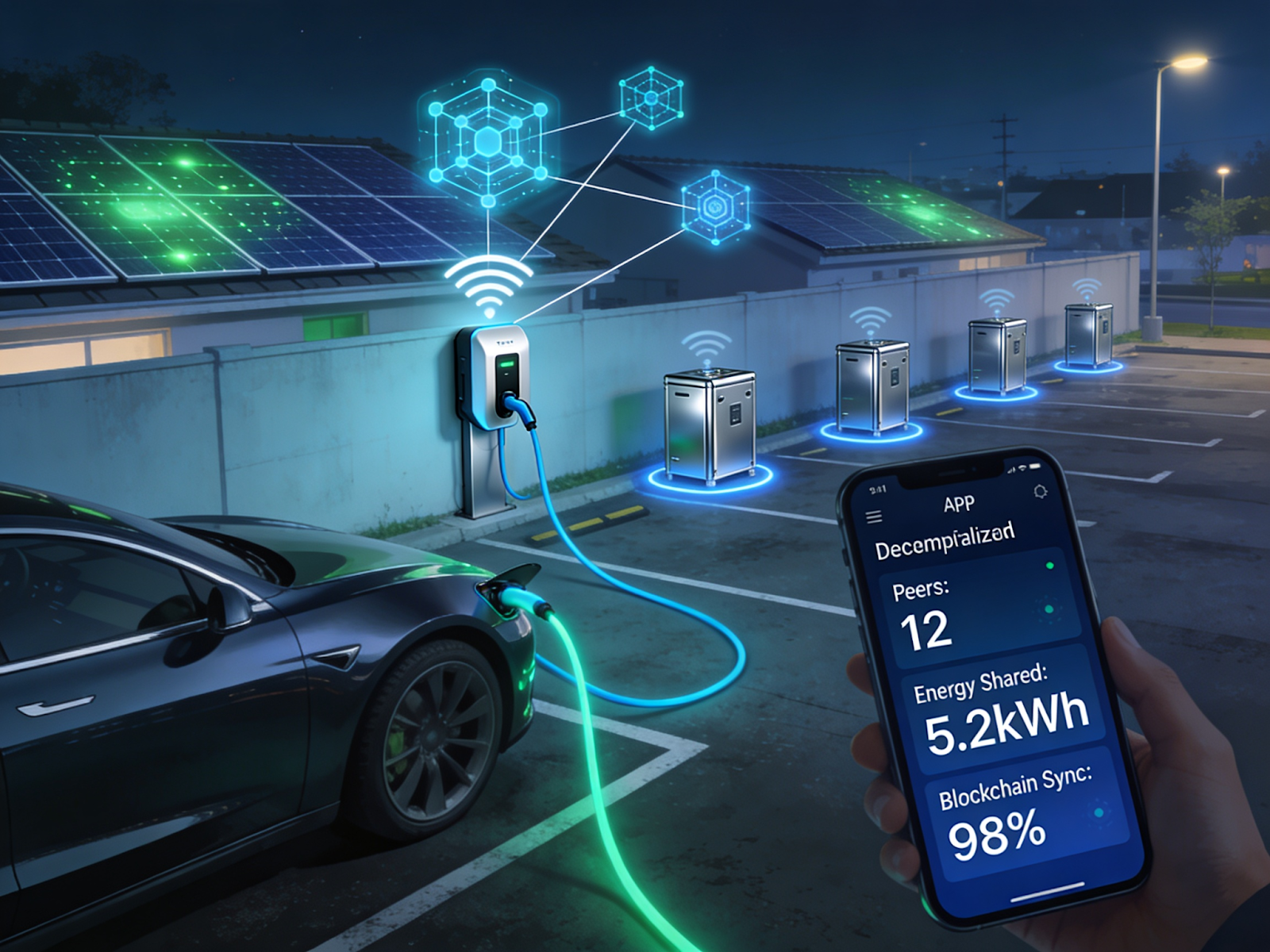
Non-fungible tokens (NFTs) can be used to represent real-world physical devices on-chain as uniquely identifiable assets. The owners of these NFTs are paid any revenue generated by the machine, making physical infrastructure a much easier investment opportunity.
What’s more, these NFTs can be fractionised into small chunks. As such, this removes the barrier to entry into the market for high-value infrastructure (e.g., a wind turbine) previously only accessible to multimillion-dollar companies.
This creates an exciting possibility whereby communities could collectively own their own infrastructure through shares of NFTs and democratically decide how the infrastructure is run through a DAO governance model.
The evolution of governance through on-chain voting and DAOs, as well as the user control through DePINs, signals a move toward greater transparency, efficiency, and inclusivity in both digital and physical systems. By circumventing big tech companies and enabling direct participation, these blockchain‑based systems give power back to communities.
To accommodate these sorts of systems, governments and institutions must adapt existing legal frameworks without stifling innovation. When blockchain technology is successfully implemented, it is able to provide fairer, faster and more secure governance across all elements of our lives.