

A few years ago, cryptocurrencies were seen as the wild west of the financial landscape. Recently, there has been a turning point, with institutions such as BlackRock and Goldman Sachs pouring hundreds of millions into currencies like Bitcoin and Ethereum, as the launch of exchange-traded funds begins to reshape how everyday investors gain exposure to digital assets.
These new regulated assets have helped connect the world of traditional finance and crypto. Without the added complexity and risk of having to buy these coins on the blockchain, investors can now access crypto’s returns through familiar financial instruments listed on major exchanges.
In 2019, only 22% of US institutional investors reported a crypto allocation. Today, EY reports that more than 86% have, or plan to increase, their exposure in 2025. What was once mocked and considered a speculative bubble is now emerging as a serious contender for the future of global finance, with ETFs being the clearest sign of that evolution.

An ETF, short for exchange-traded fund, is a type of fund that tracks the price movement of something else, like gold, a stock index, or a cryptocurrency. With ETFs, instead of owning the asset directly, you buy shares in the fund, and these shares move up and down with the value of the underlying asset. They trade on stock exchanges, so investors can buy and sell them as easily as any equity.
There are two main kinds of ETFs when it comes to crypto. Futures ETFs were the first to appear in the U.S. in October 2021. Think of futures as a scheduled bet: two people agree now on what they think Bitcoin’s price will be later, and the fund simply tracks those bets. As they do not hold any actual tokens, these early funds provided a safer testing ground for investors and regulators.
Spot ETFs, first approved in January 2024, hold the cryptocurrency itself. Their price moves directly with the market price, giving investors a more accurate tool to trade with. They quickly became the dominant type of crypto ETF, drawing in billions of inflows.
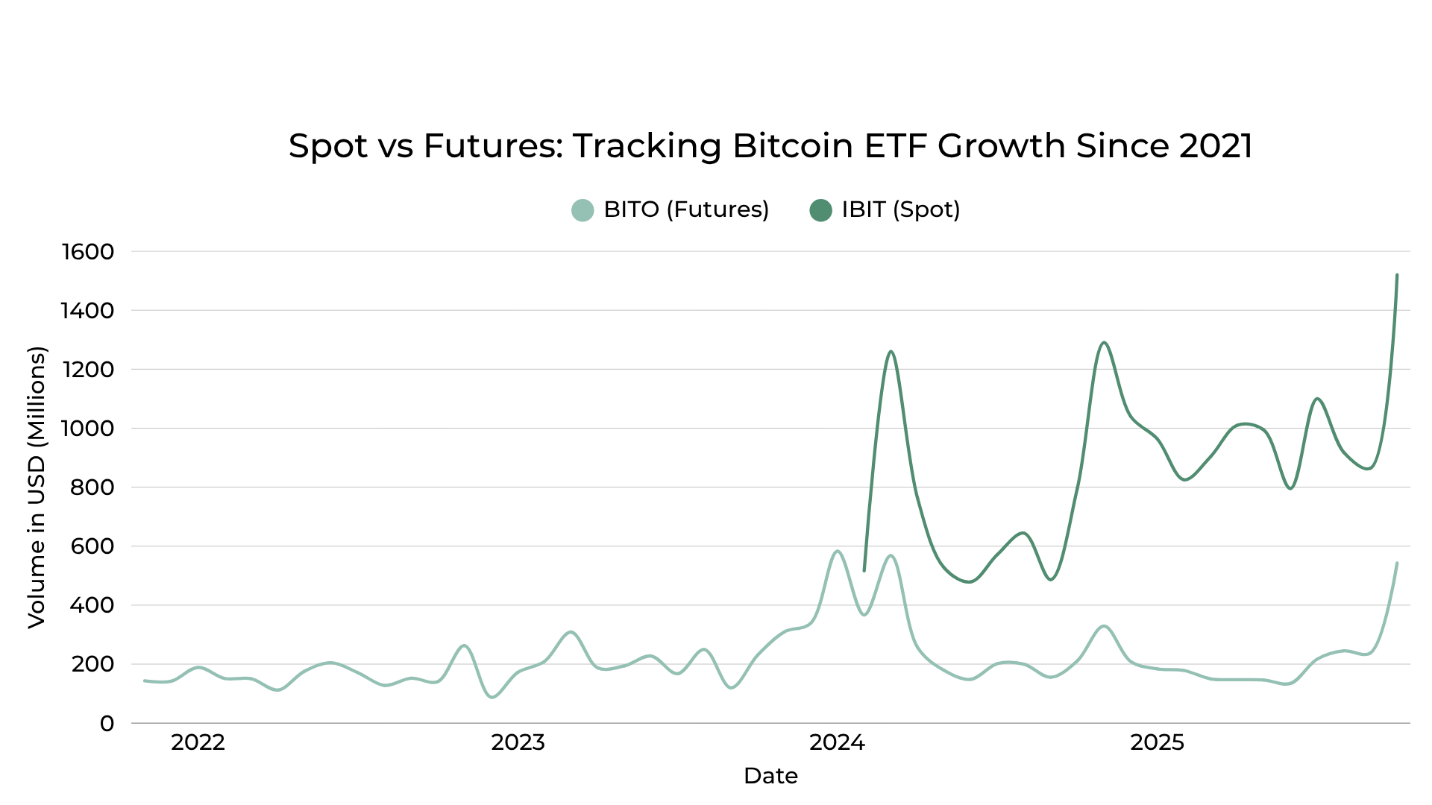
ETFs increase accessibility. Many investors find crypto intimidating because of its complexity and risks. With ETFs, you can buy Bitcoin exposure in the same account you use to trade stocks. Their approval by regulators such as the SEC in the USA also marks a turning point for institutional trust, giving crypto a new level of legitimacy.
Bitcoin can now sit alongside equities, commodities, or bonds. This means research desks can analyse it, compliance teams can approve it, and wealth managers can recommend it, all without touching a blockchain wallet.
Spot ETFs directly affect demand for crypto since they require actual purchases of tokens. This creates a steady stream of buying pressure that can tighten supply, gradually reducing the amount available on exchanges and strengthening the link between investor flows and market prices.
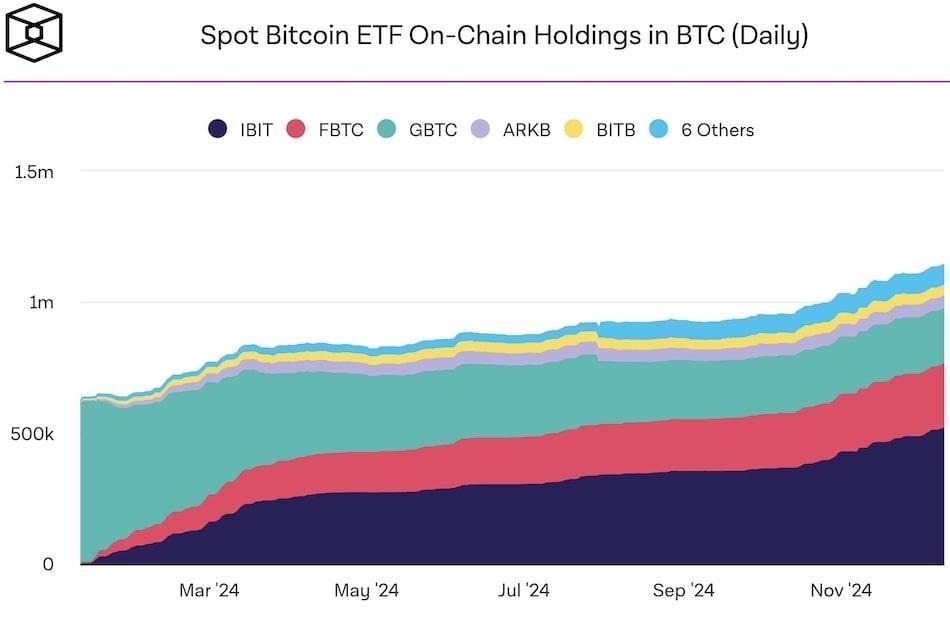
Spot ETFs must buy and hold real coins. This creates a steady, rule-governed source of demand, as whenever investors buy into the fund it takes tokens off the market. As a result, price movements start responding more to economic indicators and institutional behaviour than to hype.
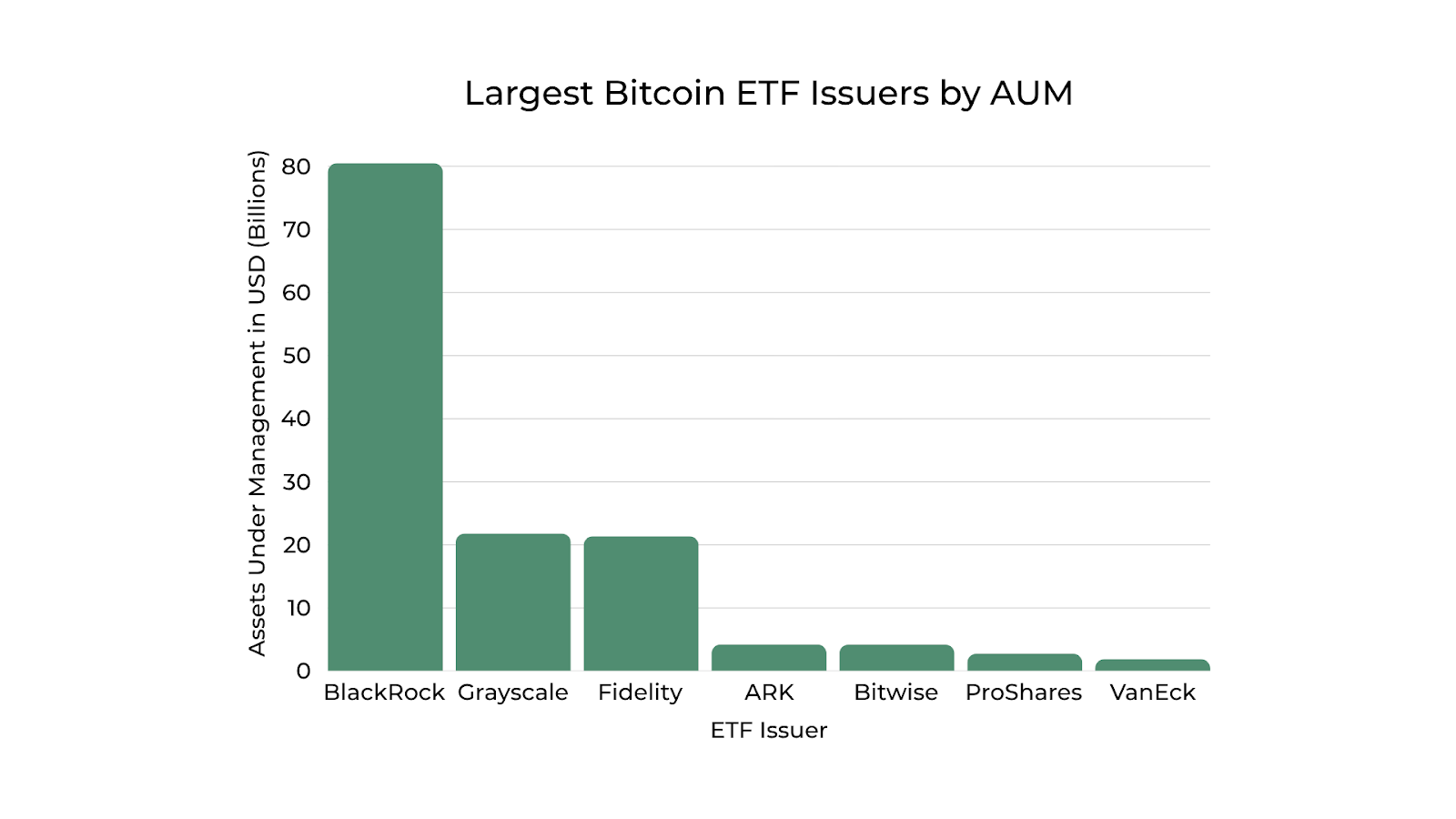
ETF issuers, the asset managers behind these funds, have done more than just launch new products. BlackRock, Fidelity, and Grayscale now dominate Bitcoin ETF holdings, giving the market a level of credibility that smaller firms couldn’t provide. Their presence signals the crypto industry’s subtle legitimisation.
In previous bull runs, prices often jumped due to social media trends, causing sudden retail waves. However, ETF-driven demand is steadier, reducing volatility and making market behaviour feel more predictable than in earlier cycles.
ETFs have given investors a more consistent place to track prices. Instead of prices being spread across different exchanges, investors can now look to ETF markets as a more stable reference point, similar to how gold ETFs provide clear readings of value even when physical markets vary.
Managing billions in crypto through ETFs has forced the industry to rethink how it stores and protects assets. Companies like Coinbase and Fidelity have upgraded their systems with stricter, more proven protection methods such as cold storage, regular audits, and insurance policies that cover large holdings. These improvements are helping to rebuild trust in a space that has often lacked it.
The initial approval of spot ETFs has led regulators to set clearer standards for how digital-asset products operate. Other regions, including the EU and Hong Kong, are now building similar standards, shifting crypto from something governments resisted to something they can supervise.
ETFs have changed the investment conversation around crypto, particularly for institutions. When familiar names like BlackRock or Fidelity offer a product, it reassures people that the asset has been vetted and taken seriously by professionals. That shift in confidence brings in investors who would never have gone near a crypto exchange.
But this shift hasn’t come without concerns. As more investors access crypto through large financial institutions, some argue that the market is drifting from its original goal of decentralisation. One recent analysis warned that while ETFs make crypto easier to access, they also risk undermining the very principles of decentralisation that made cryptocurrencies appealing in the first place. If ownership becomes concentrated, control over the asset could slowly begin to centralise in the system that crypto was meant to sit outside of, weakening its decentralisation.
The approval of Bitcoin ETFs has opened the door for other assets. Ethereum ETFs have already gained traction, and more issuers are pushing for ETFs tied to other major cryptocurrencies.
The next step is bundled products, crypto index funds that combine assets like Bitcoin, Ethereum, and others. Think of it like an S&P 500 for crypto. This would give investors broader, more diversified exposure. Similar to stock indices, these bundled products could drive more stable and long-term flows into the sector.
The range of what can be wrapped into an ETF is expanding fast. In early 2025, asset manager Canary Capital filed for a ‘Pudgy Penguins ETF’, a product tied to the PENGU coin derived from the popular NFT collection. There are many similar applications for tokens linked to meme coins, DeFi protocols, and layer 2 networks. While most of these are still pending approval, they signal how far the ETF model could stretch beyond Bitcoin and Ethereum.
The ETF infrastructure being built now sets the stage for the tokenisation of mainstream assets such as treasuries, real estate, private credit, and commodities. Major banks like J.P. Morgan are already transitioning to this area.
ETFs could end up being the bridge that marries blockchain technology and everyday financial products.
As the U.S. leads with spot ETFs, other regions are moving quickly to catch up. Countries in Asia and Europe are working to build rules that accommodate a wider range of crypto investment products.
Despite this progress, not everything is straightforward. Regulators remain cautious about approving ETFs for smaller or more volatile tokens due to concerns over possible market manipulation and insufficient liquidity. SEC Commissioner Caroline Crenshaw reports that crypto remains stuck in a regulatory grey zone, with conflicting interpretations and no real framework, making future regulation even more difficult.
Institutional adoption also faces practical hurdles. Fees are inconsistent across issuers, moving and storing crypto is still complicated, and most institutions lack the internal infrastructure to handle crypto products. The next phase of growth will depend on whether regulators, investors, and institutions can agree on rules that encourage progress without letting risks spiral.

ETFs have dragged crypto into the financial mainstream. What was once a speculative, retail-driven market is now being shaped by large institutions, regulated capital flows, and stricter oversight. None of this solves the deeper issues. Regulation remains unclear, global rules don’t align, and the tension between institutional control and decentralisation is becoming harder to ignore.
Even so, the shift matters. ETFs have pushed crypto into the same systems that govern traditional finance. The real test now is whether the asset class can grow under genuine scrutiny rather than hype. If it can, ETFs will be remembered as the moment crypto matured. If it can’t, they may mark the point where the industry’s limits came into focus.