
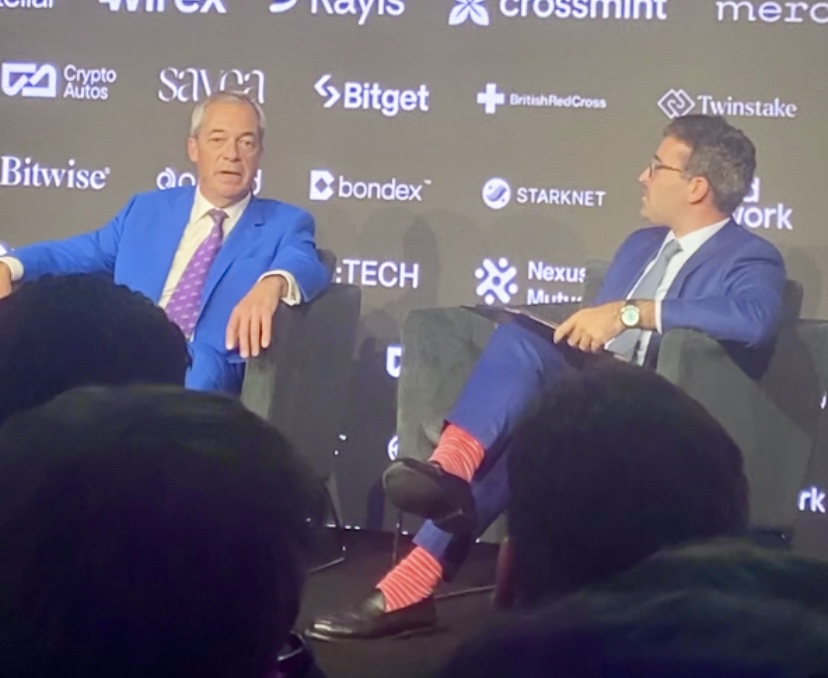
On display was a flamboyant, Trump-esque political performance, but the question remains: was it a calculated bid to win over voters, or a genuine attempt to reshape the UK’s digital asset landscape? Drawing comparisons to Donald Trump’s populist style, Nigel Farage has set his sights on the country’s crypto future. Among his proposals is the creation of a national Bitcoin reserve. Citing Chancellor Rachel Reeves’ cache of seized Bitcoin, Farage urged the Bank of England to treat it as “the beginning of a Bitcoin reserve”.
Whether or not Farage’s proposal gains political traction, it has pushed digital assets into the national conversation, suggesting that crypto will soon become a serious topic in British economic policy. Farage promoted digital assets as the key to being in control of your “own money,” and a way of “being free from authoritarian government,” which appeared to be the most attractive quality to him. This was underscored by him declaring that “We [Reform] … are the only hope for this industry”, neatly aligning his political brand to the optimism surrounding decentralised finance.
From this, it could be said that the comments made at Zebu Live were more of a political stunt, with Farage aiming to gain attention and ensure that the digital asset “community [was] here to support” Reform. This point was highlighted when Farage suggested that transferring “100 quid a month into Coinbase” would cause your bank to “probably close you down”, a statement that raised eyebrows at a crypto summit packed with industry experts.
Reviewing the policies of the UK’s largest banks shows that most reserve the right to set limits on cryptocurrency purchases, as digital assets aren’t protected under the Financial Conduct Authority or the Financial Services Compensation Scheme. Despite this, there’s little evidence that banks close accounts solely for transfers to regulated centralised exchanges. Many instead use spending caps, such as HSBC’s £2,500 per transaction and £10,000 per 30-day rolling period (details at HSBC). These limits far exceed the monthly £100 figure.
That said, Nigel Farage did express a genuine positive outlook on cryptocurrency, repeatedly referring to it as the “ultimate freedom” during the discussion. He reinforced his conviction by revealing that he holds long-term crypto investments, a stance that, given his background as a former commodities trader, underscores his confidence in the future of digital assets.
Ultimately, Farage’s embrace of cryptocurrency has thrust digital assets into the political spotlight. As the UK debates the role of decentralised finance in its economy, one thing is clear: his flamboyant theatrics have made crypto a major talking point when considering the future of the UK economy.
