


Decentralised finance offers opportunities for the world’s unbanked. In on-chain credit markets, any asset holder can lend and borrow digital currencies securely. Unlike traditional lenders, leaders in the Defi lending market, such as Aave, rely on full collateralisation: loans must be backed up by holdings at least as valuable as the sum borrowed.
One obstacle is that protecting lenders ultimately excludes the poorest households from access: borrowers must already hold collateral worth at least as much as the loan, so Defi lending benefits wealthier users most. This is different to traditional credit markets, where borrowing is based on income or an initial deposit rather than full upfront collateral. In both systems, however, access to credit remains unequal.
Nonetheless, via Defi exchanges, individuals in developing countries can hedge against losses associated with a weak and unstable home currency. Consumers can protect savings via stablecoins, send remittances at low costs, and make transactions without a bank account. In this way, those previously unbanked can now access the global financial system.
Yet accessing decentralised finance remains a challenge, since converting local currency into crypto is still reliant on the traditional financial system. Most users need a bank account, a card provider or a centralised exchange to purchase cryptocurrency.
Governments face the opportunity to legitimise stablecoin use before large financial firms consolidate control over digital credit. There are several motivations for doing so. First, early regulation could encourage greater competition and innovation. Second, stablecoins provide real cost savings - both in cheaper payments and in providing safer savings in high-inflation countries.
One fear amongst crypto sceptics, though, is that promoting the use of digital assets will weaken domestic monetary sovereignty. Some worry this would worsen financial crises, since governments have limited capacity to stabilise decentralised credit markets.
The European Union’s new MiCA (Markets in Crypto-Assets Regulation) framework takes a hesitant step in recognising and formalising stablecoin use. In tightening regulation, MiCA raises barriers to entry for European firms and maintains a cautious stance towards digital assets.
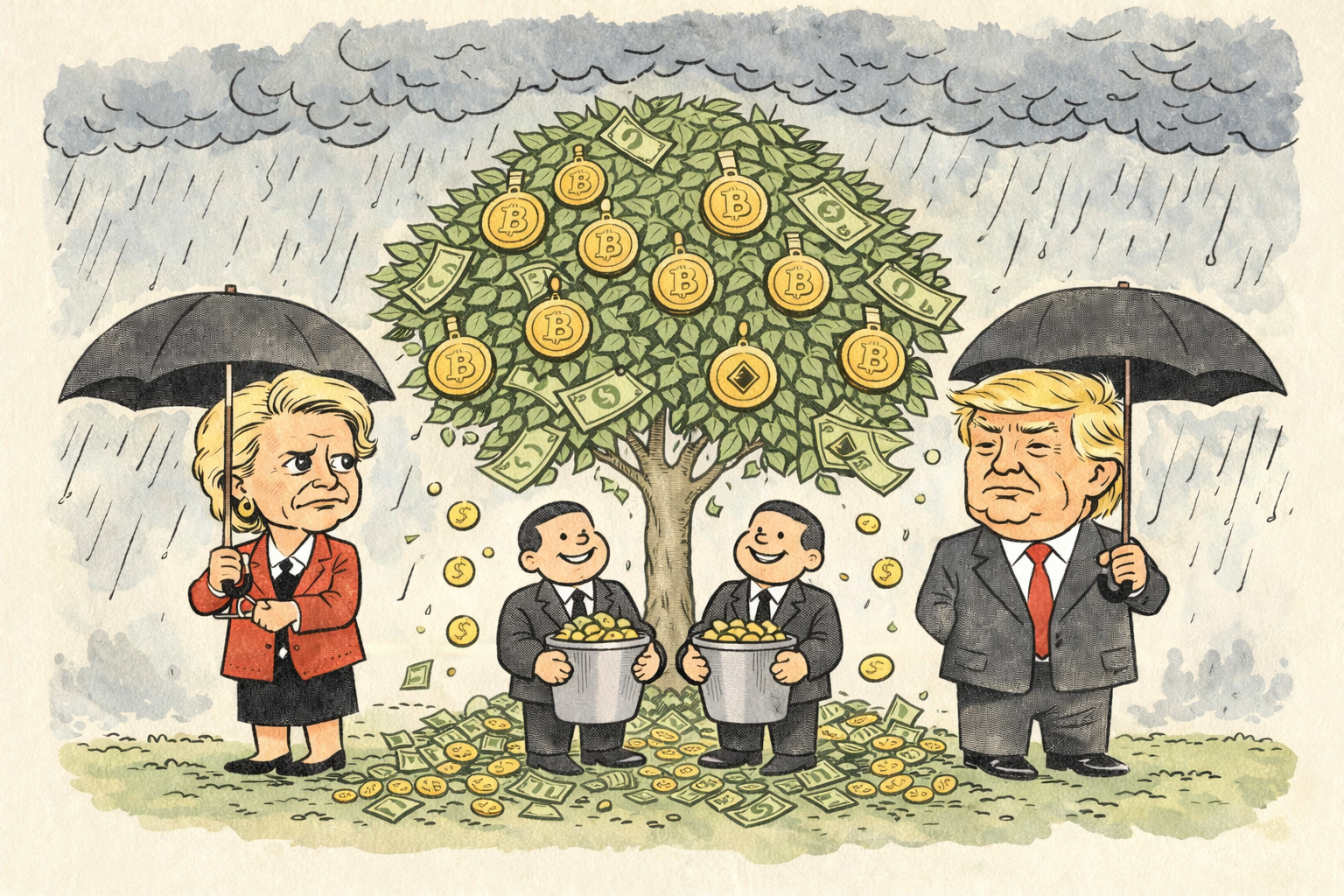
The US has taken a different approach. Last April, President Trump signed a joint resolution on digital assets, repealing an IRS rule that would have extended ‘broker’ tax reporting requirements to Defi intermediaries. This reduces the Defi platform’s reporting obligations and makes it easier for new start-ups to facilitate decentralised trades. Given the dollar’s central role in global markets, shifts in US policy are likely to influence how digital assets develop beyond its borders.
Still, deregulation appears to be targeted and raises questions over whether crypto policy is designed to benefit the industry’s most powerful players. If deregulation is selective, innovation may turn into institutional capture. Winners in the race to decentralise finance will be those most able to lobby and integrate with traditional finance.
It has been close to five years since Andrew Bailey, Governor of the BoE, dismissed the term cryptocurrencies, arguing a cryptoasset ‘is not money … and has no intrinsic value because it has no backing’ (15 June 2021).

Yet as the UK looks forward, it remains unclear whether it will follow in the path of the US or that of the EU. A recent consultation paper from the Financial Conduct Authority argues that Defi cryptoasset activities that possess the ‘same risks as centralised services should have the same regulatory outcomes, regardless of their underlying technology’.
Nevertheless, the FCA remains cautious, with its regulatory review still ongoing. With the US regulatory landscape moving quickly owing to executive action, it remains to be seen if the UK will accelerate its own regulatory timeline.
While Defi technology has popularised automated market makers and created new financial products, the end goal was financial inclusion, not private gains.
Until Western institutions take decisive action to de-monopolise credit, the world’s unbanked will have to wait.